 It would be really easy for me to give you the polite, for-company explanation; “Petey worked 7P-7A for so many years, it reset our circadian rhythms.
But, despite the fact that it may pinch, or embarrass, or make me sad, I always endeavor to tell you, Gentle Reader, the truth. So, here’s the dog-honest truth. From the day I was born (in the late afternoon, I might add), mornings and I have had a sincerely adversarial relationship. 1AM is the shank of the evening, and my morning does not comfortably start until at least 12-1PM.
Growing up, it drove my folks around the bend trying to get me out of bed for school. When The Kid was in school I bemoaned the absolute lack of night school for second-graders. It’s just how I’m built. I worked 7A-3P in a hospital lab for a year. People told me that after a while, I’d get used to it and become a morning person. I hated and dreaded every single day of it.
Every.Single.Day. Luckily, Petey has a matching loose screw. We actually take turns getting up early (for us); first with our child, and now with our dog.
And, I usually eat a little something upon rising. But, I’m not sure what to call it.
By the time I get up, walk the dog, take care of a few things, I sit down with a light meal somewhere north of 2PM. So, is it breakfast? Brunch? Lunch? Is it dunch (dinner/lunch)?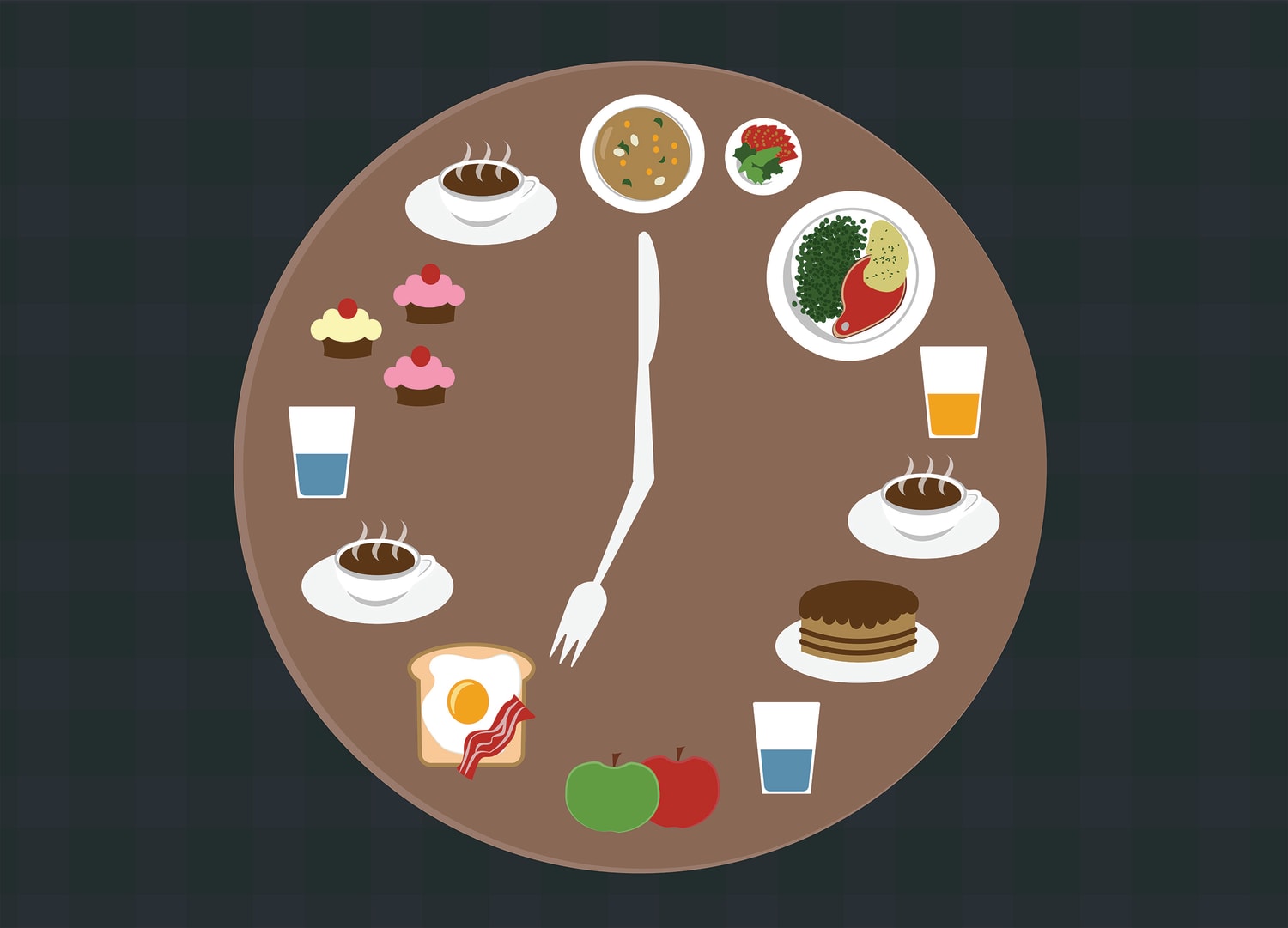 Breakfast for dinner, though, I have no problem naming. Heck, I love breakfast for dinner so much, I’d happily call it Fred.
Fred’s a wonderful meal. It’s easy to cook; because every item’s normally one cooking technique. And there’s a lot of stove-top cooking, which keeps you close so that you’re forced to keep an eye on things.  So, here are a few tips and methods that will make your breakfast for dinner a treat, and not a penance.
1.) For scrambled eggs; use a blender so there’s no weird white stuff. Use a tablespoon of butter for every two eggs. Season the eggs right after they go in the pan. Stir constantly, cook quickly, and keep them a little wetter than you want to eat them, as they’ll continue to cook on the plate.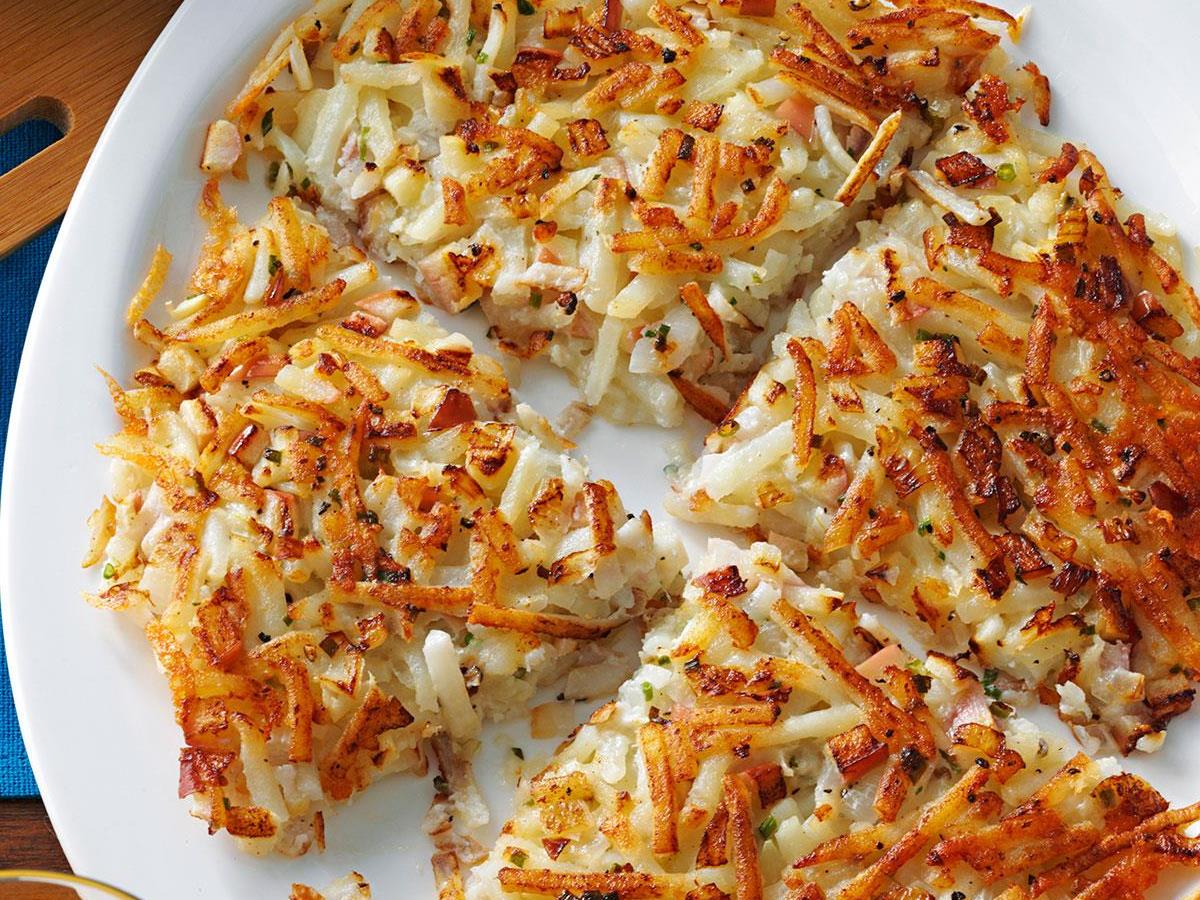 2.) Hash browns; melt butter in a skillet, then toss shredded potatoes and onions in butter to coat. Cook in a flat cake, flip when browned, and cook on the other side. At a stove-top setting of 3.5-4, they should take about 15-20 minutes to cook.
3.) If you have some not-so-fresh biscuits or scones, melt butter in a pan, place in biscuits, cover, lower temp to 3 or so, and cook for just a couple minutes. This will heat it through and crisp one side. Remove cover, add more butter to pan, then flip and crisp on the other side. 4.) If you take nothing else from this epistle, clean up as you go along. Breakfast can make a mess of your kitchen. Keep your counters cleared and wiped. Throw food waste in the compost or trash can right away, not the sink—that stops the quick rinsing and washing up that will save your sanity. Get your prep work done and cleaned up before cooking anything. Set your table and have beverages and condiments ready. If you use a dishwasher, have it empty and ready to receive the oncoming storm.
 So, call it breakfast for dinner, call it Fred, call it Agent Colson, just don’t forget to call me when it’s on the menu.
Thanks for your time.
 Anne Burrell is kind of a big deal at Food Network.
 But as a baker, she has really blond hair. And, as a baker, she loves spending time in upstate New York with her family. And, as a baker, Chef Burrell studied cooking in Italy. All this witty bush beating is my way of saying that her baking muscles are either undeveloped or atrophied.
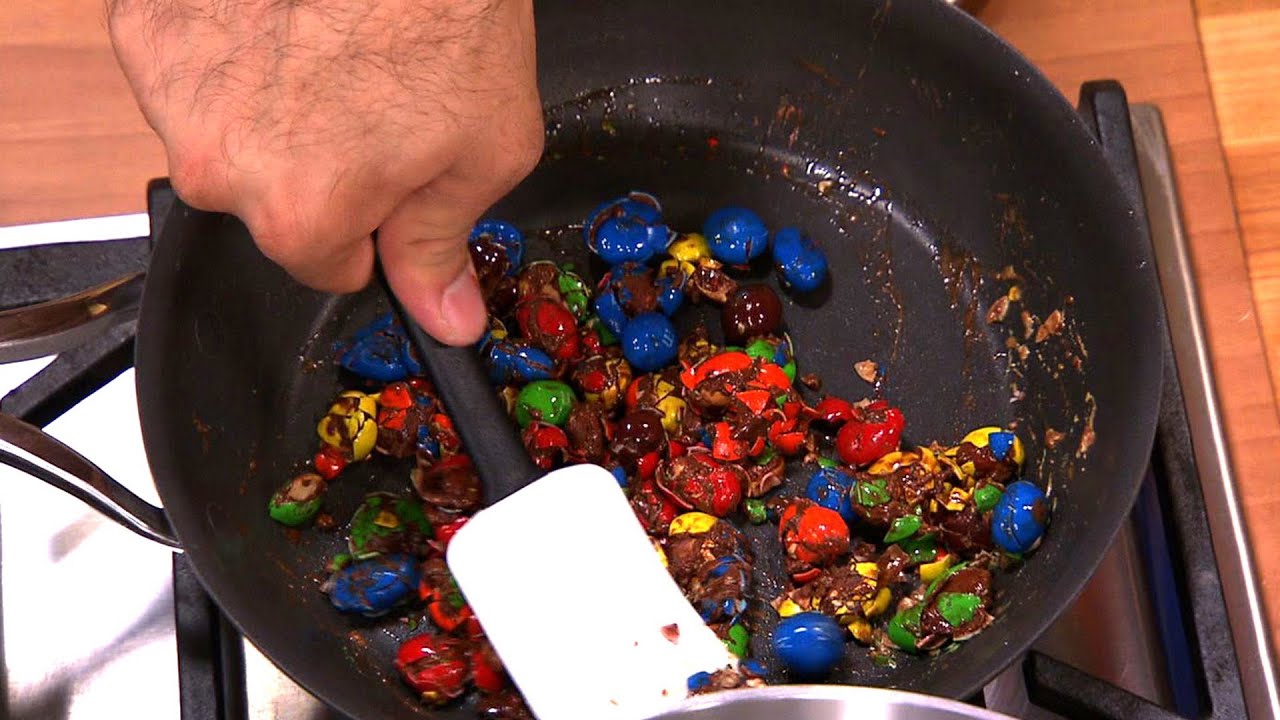 Remember, these contestants are folks who show up and make their signature dish of mole marinara spaghetti studded with peanut M&M’s or matzo ball gummy bear gazpacho. They believe that eggplants are some sort of purple bird egg and corned beef is both a meat (beef) and a vegetable (corn).
 When it’s all said and done, baking is science. It’s chemistry. If you can read, follow directions and learn a few terms and techniques, you can be a successful baker. You may not be an inspired pastry chef, but you can turn out after school treats, bake sale cupcakes, and pie for Thanksgiving dinner without blowing anything up or killing anybody.
 My English teacher, Mrs. Flood told me something that I’ve come to believe is true in most endeavors: first you have to learn the rules, then and only then can you bend and/or break them. She was talking grammar, but it applies to baking. Thus, when teaching novices, it’s imperative that they are taught best practices.
 I let out an involuntary shriek and got angry on behalf of all the attentive students, both on the show, and at home watching.
 Secondly, you never dump egg from shell straight to bowl. An eggshell shard that has escaped along with the egg will be impossible to find and remove amongst the other contents. Nothing quells my appetite faster than eating an egg dish and feeling that crunch of doom as you bite down on an errant shell.
  And what if something is wrong with the egg? Do you want a bunch of blood in your white cake? Or what if it’s rotten? Yuck. You’ve just wasted every other ingredient that made it into your bowl before the eggs. And what if you don’t have enough on hand to recreate the recipe? You have to run to the store or abandon the project.
 So, the grasshopper must be taught diligently, paying strict attention to proper procedure. Then when the educated cook chooses to cut corners, they take an informed risk. And if/when it gets screwed up, then I know I have only myself to blame.

 “Debbie, where did you try this? Unless it’s been well-prepared, by somebody who knows what they’re doing, you can’t know if you like it or not. So, knock it off.”

 But I liked it. It was cooked perfectly. And the flavor was pleasant, and not fishy in the slightest.
 And you can make the cream yourself. Flavor it however you want, and beat it to soft tender peaks. Serve it on fish, chicken, veggies, or if you want me to move in with you, soft-boiled eggs. I’m serious; please give this stuff a try.
 There’s this new relationship term—ghosting.
 So, here’s the thing; for various reasons, I am extremely skeptical about the whole gluten-free, celiac thing.
 4 cups steamed, fresh cauliflower
 So get in there and break out some neglected kitchen toys. You’ll remember why you thought they were such a great idea in the first place.
 Thanks for your time.
 No matter where, or when, if I’m eating out and there are Eggs Benedict on the menu, I order it. And I always ask for extra Hollandaise.
 What do these facts say about me?
/about/Homemade-Mayonnaise-Recipe-56a8d3655f9b58b7d0f57c0d.jpg) The info on this sauce is all over the place. It was either invented in the 1600’s or maybe the 1700’s. Hollandaise is named for the region in Netherlands, either because it was invented there, or because Holland has the best eggs and butter, which are the two main ingredients.
The info on this sauce is all over the place. It was either invented in the 1600’s or maybe the 1700’s. Hollandaise is named for the region in Netherlands, either because it was invented there, or because Holland has the best eggs and butter, which are the two main ingredients. Long ago, my mom belonged to a book club. Not the kind where you sit around in somebody’s living room drinking pinot and discussing the latest Oprah pick. Books came in the mail.
 Years later, Mom gave it to me. I had no idea that the author was considered one of this country’s all-time best food writers. I also didn’t have a clue that one day I would be a food writer myself. But, as an extreme novice in the kitchen, I took help and inspiration wherever I found it.
 Makes 4 servings.
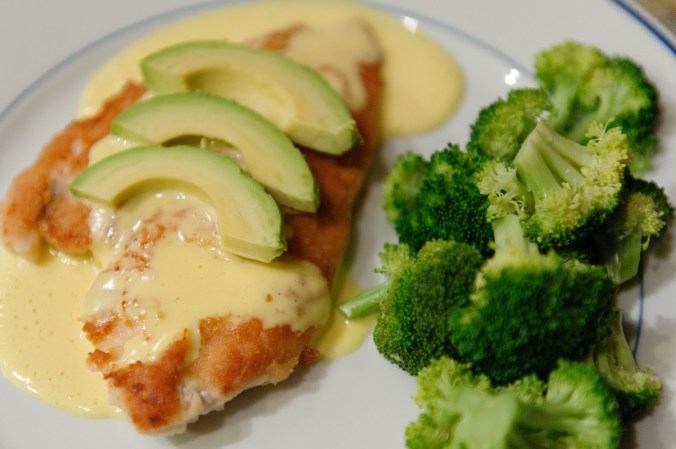 Like Craig says, the sauce goes great on veggies, fish, and eggs. But I love it on fried, boneless, skinless chicken breasts and it’s crazy good on any type of pasta.
 Thanks for your time.


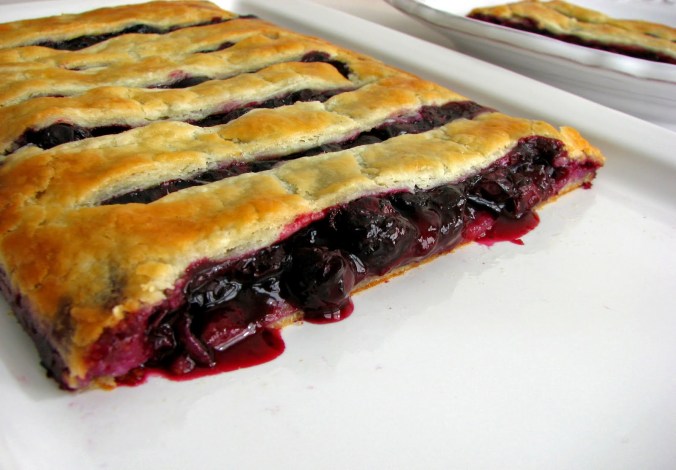
 This recipe is made with frozen puff pastry, found in most supermarkets, and made by layering dough with butter, rolling, and refolding, countless times. This gives it up to a thousand layers. The water in the butter evaporates while baking. This produces steam which gives the puff.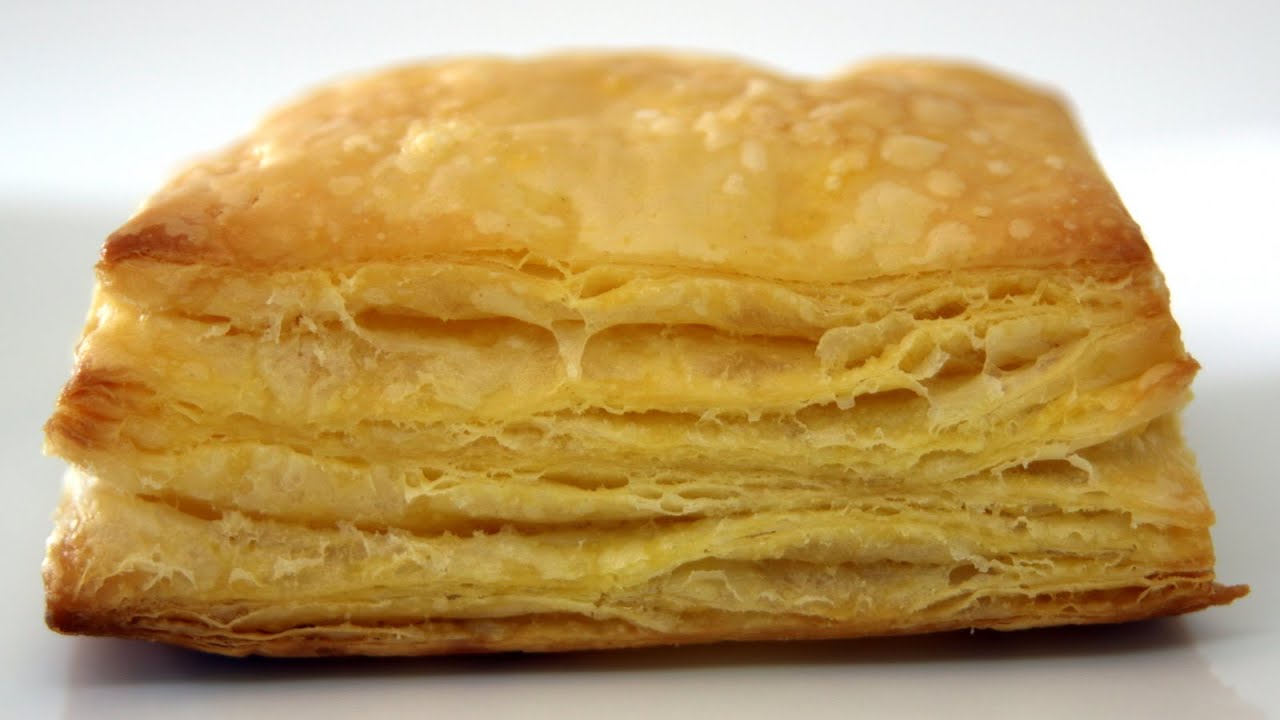
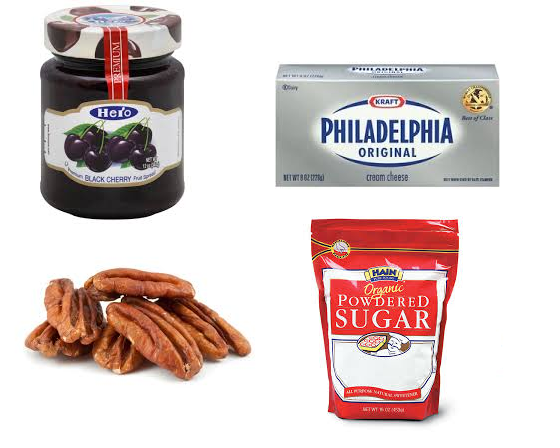
 2 sheets puff pastry, thawed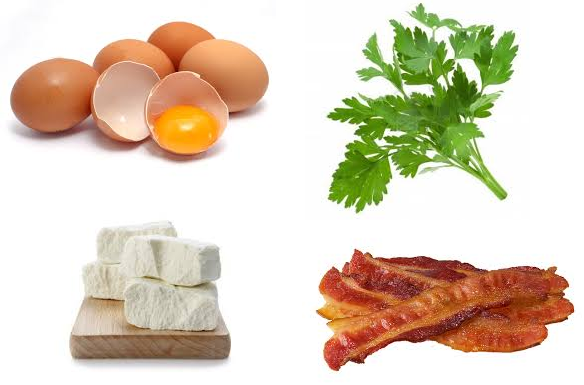




 bull city mom