Pucker up

What’s better than lounging around your pool, drinking a thick, creamy, chocolate milkshake?  Or if you’d rather, a daiquiri; you be you.

How about Antonio Banderas holding that glass for you, and bringing the straw to your lips.

You know…I don’t even need the pool, the milkshake, or the boat.

What’s better than lounging around your pool, sipping on a drink held by Antonio Banderas?

Drinking from a glass held by Antonio Banderas while lounging around the pool on your disgustingly opulent yacht.

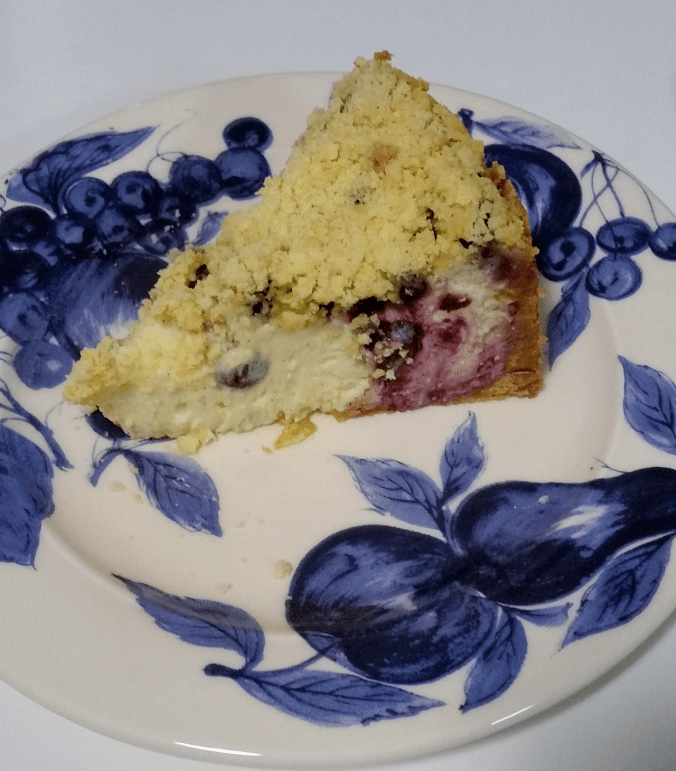
In that same vein, what’s better than a creamy lemon cheesecake?

full cheesecake

A creamy lemon cheesecake that’s unbelievably, insanely, easy to make, and topped with a lemony blueberry streusel, that’s what.

When I started cooking in earnest, I loved to pick up the little cookbooks in the checkout line in the supermarket.  My favorites are the Pillsbury Cook-Off booklets.  They have the top recipes from all categories.  I purchased my favorite, which I still have and use, in 1994.

Although there are quite a few dishes in it that I still prepare, there’s one recipe in it that I’ve made literally hundreds of times.  It alone was more than worth the price (which back then was all of $2.75).

As always, I played with it, tweaked a few things, and made the recipe my own.  The newest twist is the addition of blueberries.  I love them, but my mom’s really crazy for those navy nuggets.  She is whom I had in mind when I made the change.

It would make a terrific dessert for Easter dinner.  And it travels great, in case you’re doing dinner elsewhere.

Vanilla bean lemon cheesecake with blueberry streusel

lemon blueberry cheesecake

Crust:

1-18.25 ounce package lemon cake mix

½ cup butter, softened

Zest of 1 lemon

Filling:

2-8 ounce packages of cream cheese, softened

3 large eggs

1-8 ounce container lemon yogurt

1-16 ounce can lemon frosting

1 vanilla bean

Topping:

1-2 cups fresh blueberries

Heat oven to 325 degrees. Lightly spray bottom of 9 or 10-inch spring form pan with non-stick cooking spray.  Place a piece of spayed parchment that is about 2 inches larger all the way around over the bottom, then clip the bottom and ring together, letting parchment hang outside. 

Blend cake mix, butter, and zest in large bowl at low speed until crumbly. Reserve 1 cup of crumb mixture for topping. Press remaining mixture into bottom and 1 ½ inches up sides of pan.  Using a metal measuring cup to help form it will get a smooth, even, crust.

Beat cream cheese, eggs, yogurt, frosting, and vanilla bean innards in same bowl at medium speed with whisk attachment until completely smooth. Pour into crust-lined pan. Very gently, one at a time, place the blueberries evenly on top.  Sprinkle reserved crumb mixture evenly over berries and filling.

Bake 1 to 1 ½ hours or until center is set, but slightly jiggly and edges are light golden brown. Cool 30 minutes. Run knife around sides of pan to loosen. Remove sides of pan, then carefully slide the parchment off the pan bottom onto serving plate and trim the excess paper. Refrigerate 2 hours before serving.  Slice with unwaxed dental floss or serrated knife dipped into very hot water.  Sliced thinly—and you really should, this serves 16.
lc4

Store leftovers in the fridge.

This makes a delicious lemon cheesecake.  But the only thing limiting the potential flavor is what kind of cake mix, frosting, and yogurt you pick.  You could also combine flavors, like chocolate and coffee, vanilla/pomegranate, or orange/caramel.

Heck, this fall you could go nuts and get your pumpkin spice on.

QzifXu7

Or not.

Thanks for your time.

The great cauliflower compromise of 2016

Sadly, to many people, compromise has become a dirty word.  Concession is considered obscene.  And accommodation is beyond the pale.

After more than three decades of marriage, I have learned the vital importance of finding a middle ground.  Bargaining and accommodation is the reason why I’ve seen most movies on TV multiple times, in ten to fifteen minutes bursts.  Petey will turn on a show, and then wander off to another channel, returning later for another short burst.  Just as I get interested and begin to suss out the plot, I’m whisked away to golf, a religious service or a couple of guys trying to sell me a blender.


Wait…Who are those guys? Oh, this isn’t the movie anymore, is it?


It normally takes around eight showings before I’ve pretty much seen the whole thing.  But there are always gaps; sometimes they’re minor scenes, sometimes major plot points.

Compromise is also the reason Petey knows the difference between pumps and platforms, eats albacore tuna and uses name-brand toilet paper.

The air was thick with compromise the other night when I made cauliflower.

The Matthews family love cauliflower.   Normally I use frozen because it’s quick, easy, and I can always have a bag at hand in the chill chest.

The default preparation is heated in the microwave and topped with browned butter.  It’s the one half of a favorite meal; road kill and brown butter cauliflower.


Not actual roadkill.


Now let me disabuse you of the image of me on the highway with a shovel and a bag.  Road kill is Matthews-speak for porcupine meatballs.  They are morsels of hamburger mixed with rice and cooked in a tomato sauce.  Because keeping the orb shape of a meatball is my kulinary kryptonite, I make them into patties.  The Kid declared the sight of them resembled roadkill, and the name stuck.

Brown butter tossed cauliflower is a terrific counterpart to the beefy patties.

But I also really like cauliflower the way my Aunt Pollie cooked it.  She cloaked it in a rich buttery cream sauce, speckled with a dusting of nutmeg.  It’s delicious and addictive, but because it’s prepared with butter and whole milk or half and half, a dish I only enjoy infrequently

The evening in question I was making a pork tenderloin and black rice, cooked with a Caribbean citrus marinade called mojo.  Because of this, both protein and starch would be relatively light so I toyed with the idea of my Aunt Pollie’s creamed cauliflower.


Delicious, but maybe a bit heavy?


But…I really like it with brown butter, and that cream sauce can feel heavy.  Then my brain turned to compromise.

I decided to try making the cream sauce with brown butter.  The recipe for classic cream sauce is butter and flour cooked together with dairy whisked in.  But roux is just butter and flour.  And I normally use peanut better-colored roux, which coincidently is the color of the solids when I make brown butter.

Brown butter cream sauce

brown butter cream sauce

¼ cup butter

¼ cup flour

1 ¼ cup skim milk

Salt and pepper to taste

Melt butter in a saucepan and stir in flour.  Cook until over medium-low heat until it’s the color of caramel. 

Whisk in milk and cook just until it starts to bubble.  Season to taste.  Pour over 16 ounces of nuked cauliflower.  Serves 4.

It turned out tasty, and made with skim milk, felt relatively virtuous.


Normally when there’s a compromise, all sides get something, but nobody gets everything they want.  But in this case, I got my brown butter and ate my cream sauce too.

Thanks for your time.

Fifth annual love letter to Durham

Growing up my dad was in the Coast Guard, and we moved every few years.  Some places I liked, some not so much.

This was just another day at the office for my dad…

But thirty years ago, a young couple moved to the Bull City.  And like kudzu, Durham has crept through me and wound itself about my heart.  This town is funky, fierce, and fabulous.  And I wouldn’t live anywhere else in the world.

Saturday I had lunch with two high school friends, Lucy, and newlywed Maxie.  We try to set everything else in our lives aside once a month, and meet.

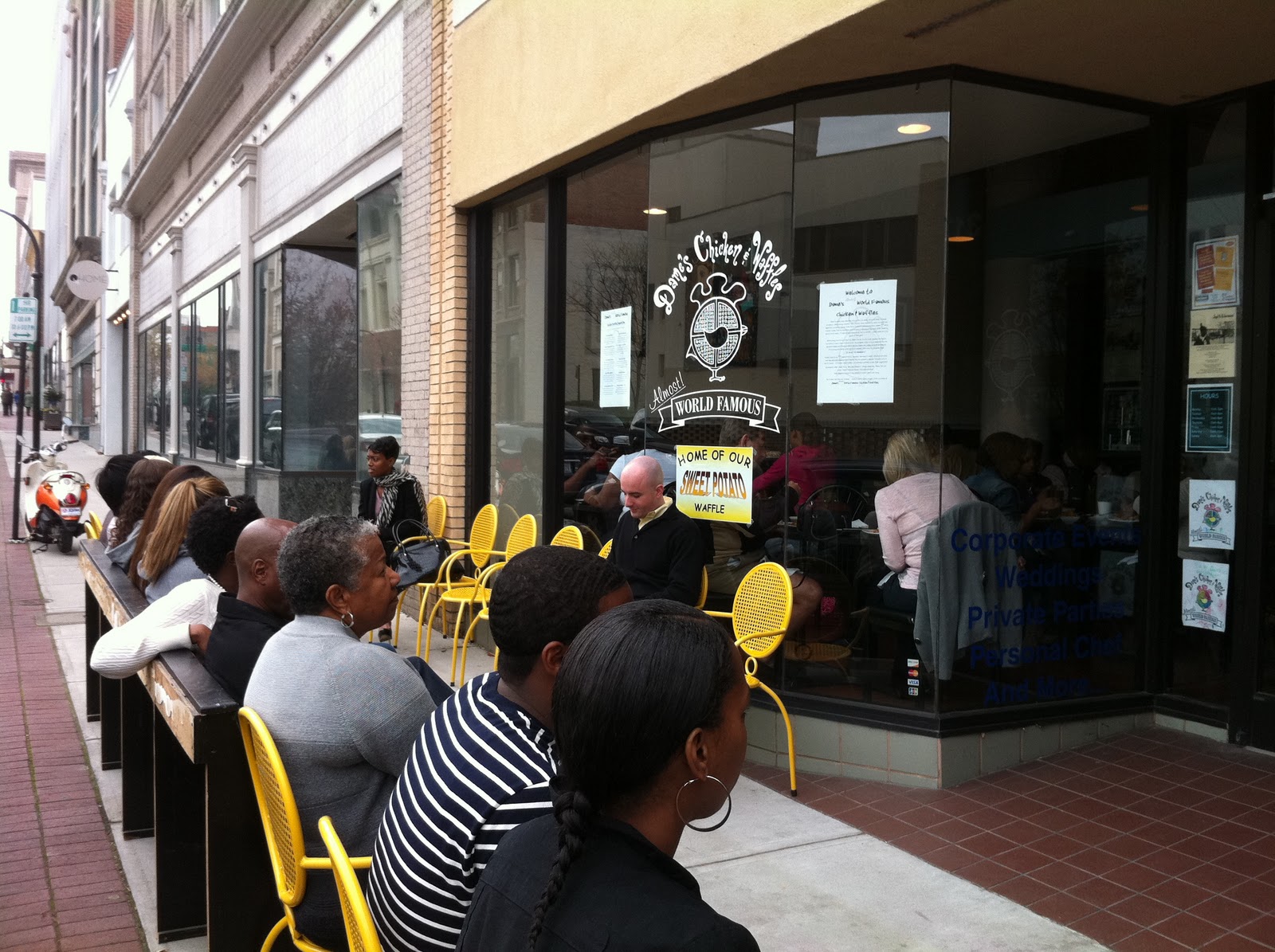
This week was Lucy’s pick.  She chose Dame’s Chicken and Waffles (317 W Main St, Durham).  Fun fact: contrary to my assumption, Dame is not a woman,.  It’s actually the nickname of owner, Damion Moore.  Another fact: they are always swamped.  The wait for a table on a Saturday afternoon was an hour and forty-five minutes.   You can make a reservation online.  Do it.


Come hungry and wear comfortable shoes, or–make a reservation.

It was the first visit for all of us, so we each ordered something different to get a bigger sample of the menu.

Here is my biggest takeaway.  Somehow, it was as if they had turned the flavor volume up to 11.  The taste of everything was bright and vivid.  I had macaroni and cheese, which was some of the best I’ve ever eaten.  I could actually taste the pasta; it wasn’t just the scaffolding supporting all the yummy cheese.  The chicken (Lucy and I had fried breast cutlets, Maxie had fried legs) was moist, deliciously crunchy, and tasted like chicken—it wasn’t just texture.

The waffles were really good—crispy on the outside, soft and tender inside.  And each plate came with something they call a schmear.

A schmear is Dame’s take on compound butter.  Here again, the flavors somehow seemed cleaner, brighter and stronger without being overwhelming.  I had almond vanilla, Lucy orange honeycomb, and Maxie had maple pecan.  There was no mistaking any of them.  Each was a delicious example of the respective flavors.

I begged Ms. Ella, who runs the kitchen, for recipes.  No dice.  I even got shot down when I asked which herb was used in the chicken and macaroni and cheese.  Still no dice.  But I really like the idea of the schmear, so I came up with my own, Dame-inspired butter.

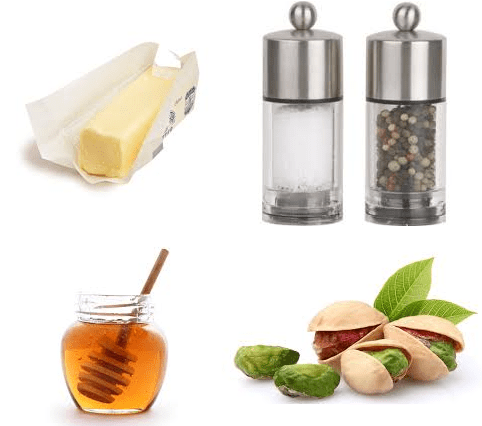
Pistachio/Honey browned butter spread

pstachio butter

2 sticks of butter

4 tablespoons finely chopped pistachios

3 tablespoons strongly flavored honey (like buckwheat)

Pinch salt and pepper

Melt butter in a saucepan, and let cook until it’s foamy and starts to brown.  When the solids are a warm caramel brown, take it off the heat and stir in the honey.  Pour into a bowl and let cool and harden.

When the browned butter has gotten to room temp, place into the bowl of a mixer.  Beat the butter, adding the pistachios.  When the butter is fully incorporated either place in a bowl and refrigerate or place onto parchment paper and roll into a log and chill.

Make about 1 ¼ cups.  Use on breakfast carbs, or melt a tablespoon onto a grilled piece of chicken or a pork chop.

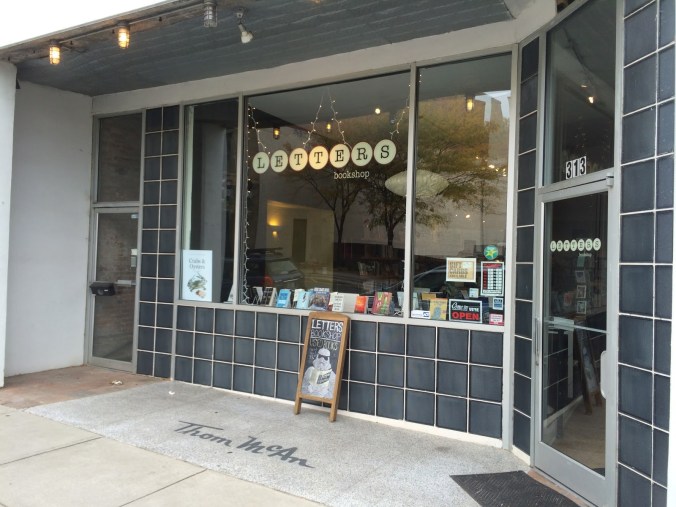
After lunch we hauled our over-stuffed, bloated carcasses down the street.  We stopped at Letters Bookshop (313 W Main St).  We each picked up a couple of books, and wanted more.

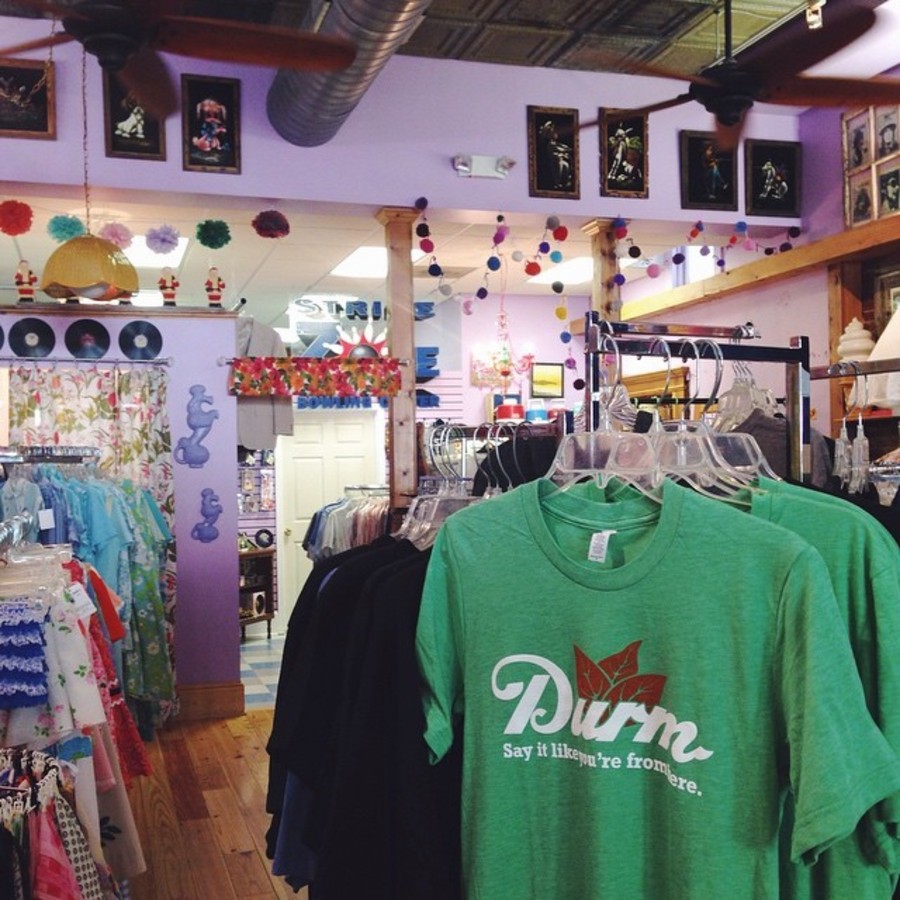
We then turned to Dolly’s Vintage (213 W Main St), a fun, colorful, whimsical shop full of adorable, affordable second-hand clothing and quirky new items, including a large selection of Durham merchandise.

We then walked around the corner and ended our day together at The Cupcake Bar (101 E Chapel Hill St).  I love this place.  They have 300 hundred flavors and 75 cent frosting shots, for dog’s sake.  I went home with chocolate stout, Irish coffee, and double vanilla minis.  And of course, as always, they were scrumptious.

Five Points was fun and busy, just what a downtown should be.  It made my heart full to be a part of it.  And girl, those folks were turned out.  I saw more cute sweaters, adorable boots, and fashionable outfits than an issue of Vogue.  They were representing Durham right.

Gosh, I love this town.

Thanks for your time.

The magic number


Chef James never met a fish he didn’t like.

I’ve been writing food columns for newspapers for almost five years now.  I have hung out with bakers in the middle of the night and listened to a cow’s innards with a stethoscope.  I’ve been taught how to filet a fish by a master (Thanks, Chef James).

I’ve interviewed David Cutcliffe, head coach of the winning Duke Football team.  I’ve gotten to know Vimala Rajendran, an Indian earth mother food activist, and Amy Tornquist, an expert in and lover of Southern food

Chef Amy at her Durham restaurant Watts Grocery.

And I am as excited about sharing this week’s info with you as anything I’ve experienced in my tenure as a food columnist.

A couple weeks ago in Kroger, I picked up a one-pound beef brisket for the low, low, price of $5.

The rule of thumb for tenderness is; the less work that a muscle does, the more tender it is.

The brisket comes from the lower chest area.  Every time Elsie takes a step, or a breath, those muscles are put to work.  Consequently, you can’t quickly cook this meat like a piece of filet mignon.  You’ll end up with beef-flavored bubble gum—and nobody wants that.

It also has a good amount of fat and connective tissue running through it, as well as a pretty healthy fat cap.  Pastrami and corned beef both come from this cut, and neither is known for exceptional leanness.

Every other time I’ve made brisket, I’ve braised it; lowly, slowly cooking in liquid—usually some type of sauce or gravy.  I’ve also cooked it with beans and in pots of barley.

But it was never that tender, unctuous cut that I’ve seen on TV and in good barbecue joints.  It didn’t come out really tough, but it wasn’t meltingly tender.  And it was usually a little dry.

This time, I would travel a different route.  I’d season it heavily and sear it like always.  Then cook it by dry-roasting.  Low and slow.

With the oven set at 225, I took a heavy baking dish, and in it I laid a rope I’d fashioned from tin foil.  I poured in about a half inch of water (this prevents smoking when the fat drips down), and set the brisket, fat side up, in the dish on the foil, to keep it above the liquid while cooking.

Then I inserted a probe thermometer, set to the magic temperature.

At 210 degrees, the connective tissue within the meat has melted, leaving a silky mouth feel, and a tender, juicy piece of meat.

When the brisket came out of the oven, it had shrunk to about half its pre-cooked size.  But the fat cap was a thing of beauty.  It was a crispy, ebony cloak, which when tapped with a knife, sounded hollow and delicious—and it was.

I can’t tell you how long this will take to cook other than to say a long time.  Depending on the size, it could take anywhere from five to nine hours.  Do it on your day off, when you’ve got nothing but time on your hands.

This week, I am also eschewing a sauce.  You could make mushroom gravy, sprinkle it with a spicy vinegar, or slather it with barbecue sauce.  But this cut, cooked dry, low and slow, doesn’t need one.

I may not be your cup of tea (shoot, sometimes I annoy myself), but please, for the love of all that is holy, pick up a brisket and cook this roasted ambrosia.  I pinky swear promise; you will not regret it.

Thanks for your time.

Mumbo gumbo

“Don’t bring your lunch tomorrow, I told my workmates.  I’ll bring food for all y’all I told ‘em.”

nhs buds

Four of my best friends in the world.  From left: Bo, Waldo, Kat, and Kelsi.

That was Bo; one of my very best and oldest friends.

She called me last night at 11:00.  And if you knew Bo, you’d know how very unusual this is.  Petey and I are unqualified, dyed-in-the-wool night owls, but my friend not only goes to bed with the chickens, she’s the one urging them along.

Bo is my kitchen role model.  She’s been a great cook since we were kids.  Her calm and confidence with all things food inspires me to try new things, even when it scares me.

So, when the phone rang, and it was Bo, but a nervous, worried Bo, I knew something was up.  She told me I was the only person that she could call this late at night (I think she must hang out with farmers and milkmen in Elizabeth City).

Those guys are straight-up party animals.

My culinary rock, the strongest, most authentic person I’ve ever known was in a tizzy because she was making gumbo for her colleagues at her new job, and realized that she had no flour for roux.

Roux is a French word, which in English roughly translates to reddish-brown.  It’s a 50/50 cooked mixture of flour and fat.  Roux can be any shade from very light blond to dark, chocolatey brown.  As roux cooks it darkens and the thickening power decreases, so more must be used. I use it almost exclusively when making gravies and thick, cream soups.  My roux of thumb (Roux of thumb; see what I did there?) is normally peanut butter-colored.  It thickens well, and imparts a buttery, nutty flavor to the food.

I use it almost exclusively when making gravies and thick, cream soups.  My roux of thumb (Roux of thumb; see what I did there?) is normally peanut butter-colored.  It thickens well, and imparts a buttery, nutty flavor to the food.

In Cajun cooking, the roux is much more rustic and cooked to a dark, brick color, which colors the food, and gives it a rich smoky flavor.

This is cajun roux.  Go any further and it is burned and unusable.

Well Bo was in the middle of a very important pot of gumbo, and out of flour.  Unfortunately, it was 10PM, and in Elizabeth City there are no 24-hour Kroger stores offering shelf after shelf of various flours for sale.

Well Bo was in the middle of a very important pot of gumbo, and out of flour.  Unfortunately, it was 10PM, and in Elizabeth City there are no 24-hour Kroger stores offering shelf after shelf of various flours for sale.

So what’s a desperate culinary rock to do?

My girl made a substitution.  She used a combination of waffle mix and white cornmeal.

And it worked.

Since you don’t normally get anything hot and spicy from me, she graciously offered to share this recipe for her spicy Cajun gumbo.  I love her make-do roux, but if you want traditional, just use one cup each flour and vegetable oil.

bo's roux

Bo’s make-do roux.

Bo’s Gumbo

gumbo

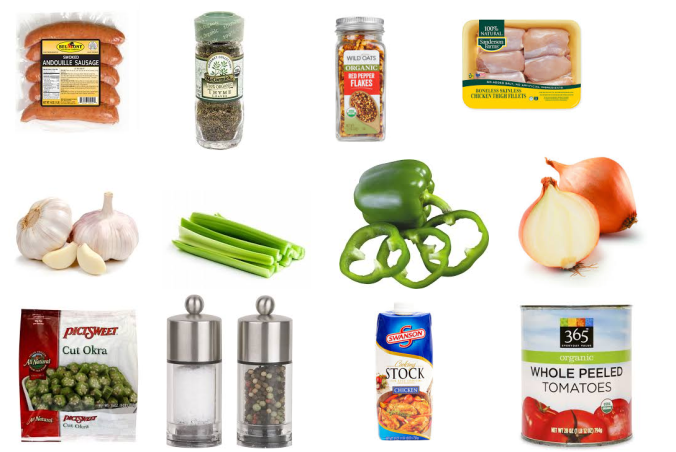
1 lb. Andouille, sliced

12 boneless, skinless chicken thighs, cut into chunks

2 green peppers, chopped

8 ribs celery, chopped

2 medium onions, chopped

2 tablespoons chopped garlic

1 large can diced tomatoes

1 bag frozen cut okra

2 tsp dried thyme

2 tsp dried red pepper flakes

8 cups (or so) chicken stock

Salt and pepper to taste

After cutting up the chicken I sprinkle it with salt, black pepper, cayenne, granulated garlic, onion powder, oregano, thyme and paprika, mix it to coat well and let it sit for a few minutes.

For the roux I used 1 cup of oil 3/4 cup of Krusteaz waffle mix and 1/4 cup white cornmeal.

Get it nice and dark.

Brown the vegetables, add Andouille and chicken, cook for about 10 minutes, stirring occasionally.

Add can of tomatoes. Start adding roux a spoonful at a time, stirring as you go. Stir in most of the chicken stock.  Add the frozen okra and let it come to a low boil, turn down heat to low and cook for 1.5 hours, stirring every five minutes or so to keep it from sticking. Add more chicken stock as needed. 

Some Andouille is hotter than others so if it isn’t spicy enough you can add hot sauce at the end to your taste.

It is better when served the next day. Most people serve it over white rice but I just eat it like it is.

You cam omit the chicken and add shrimp but only add them after it’s done or they will be little rubber bits.

I hope you enjoy this spicy dish from my friend, the spicy dish that is Bo.

Thanks for your time.

Dinner as the reward of virtue

First, let me admit that I am most definitely no goody-two-shoes, uber-organized, Martha Stewart-wannabe.

I once overheard a woman say that she tries to retrieve her laundry from the dryer before the clothes go cold.  I try to retrieve my laundry from the dryer before the clothes go out of style.

There is, however, one exception.

Growing up, my father was in the Coast Guard.  Their motto is Semper Paratus – Always Ready.   My mother’s personal motto is Clean as you go along.  The result of being raised with these two philosophies is that when cooking, I am a cleaning, prepping machine.

There are few things I love more than getting into the kitchen and knocking out every step of a meal up to the final cooking.

Which is exactly what I was doing the other day when I was putting together a pot of goulash.

I grew up eating goulash.  It consists of hamburger, pasta, tomatoes, and loads of garlic.  It’s also known as American chop suey or beefy mac.

This time I did all the prep, and after adding the pasta, covered it, and took it off the heat.  An hour later I discovered that the residual heat had almost cooked the pasta.  But they were still opaque, and tasted a little doughy.  So later, when we were ready to eat, I cooked it briefly, stirring frequently, until the cavatappi was translucent and tasted cooked.

If you want to cook it right away, instead of taking it off the heat cook it on medium covered for 10 minutes, and uncovered for 10 more, or until the noodles are cooked and the sauce is thickened and clinging to the pasta.

Now-R-Later Goulash

goulash

1 lb. 80/20 hamburger

12 ounces mushrooms

1 onion

2 heads garlic

½ teaspoon bacon fat or vegetable oil

2-14 ounce can tomatoes

1 ½ cups beef stock

2 tablespoons tomato paste

½ cup sherry

1 tablespoon Worcestershire sauce

2 bay leaves

1 ½ teaspoons dry thyme + ½ teaspoon

1 teaspoon dry oregano

1 tablespoon fresh rosemary finely chopped + 2 sprigs

2 teaspoons kosher salt + pinch

1 teaspoon freshly cracked black pepper + pinch

1 pound cavatappi pasta

Roast garlic:

Preheat oven to 350.  Cut heads of garlic in half horizontally.  Lay in piece of foil about 9 inches square. Place ½ teaspoon thyme, rosemary sprigs, pinch of salt, pepper, and oil.  Wrap, and bake for 45 minutes.  Remove from oven and let cool.  Extract garlic cloves from skins and set aside.

Put hamburger into large heavy pot with a cover.  When it’s just about cooked through, add onions, mushrooms, salt, pepper, and remaining herbs.  Cook until the veg have released and cooked out all their liquid.

Add garlic and stir.  Cook for 2-3 minutes.  Add tomato paste and mix in.  Cook until the paste has darkened, and started to stick to the bottom of the pot.  Add sherry, stir to pull up all the stuff on the bottom of the pot.  Cook until the sherry’s cook in.

Pour in tomatoes and juice.  Add beef stock.  Stir in pasta. 

Cover, take off the heat and let sit covered for 60 minutes.

10 minutes before service, put it on a medium burner, gently stirring frequently, so that all the pasta cooks to opaque.

Serve with a dollop of sour cream of Mexican crema.  Serves 8.

So, practicing the virtues taught to me by my parents, I was rewarded with a dinner that virtually cooked itself.

It’s like we dined on instant karma.

Thanks for your time.

My, how fun

I was born with what I believe is a legitimate congenital defect.

The technical, Latin nomenclature for this is (or should be), Lingua Infans, or “Baby Tongue”.

Regardless of appetites or desires, the ingestion of fiery, spicy foods results in pain and distress.  As a result, I can eat almost no Indian food, and Jamaican food scares the pants off me.  Even a heavy-handed use of black pepper can overwhelm.

Many people make fun of this flaw, and inform me that it’s a matter of will; that if I want to be a grown-up and eat spicy foods, I should just put on my big girl panties, and do it.  Not true.  I’d love to be able to tuck into a plate of tikka masala, or some spicy nachos, but I am physically unable to do it.

But what I also don’t do is make a big deal out of it.  It’s my habañero-covered cross to bear, no one else’s.  So when eating out I’ve become very good at avoiding suspect menu items.

I think that’s one reason why I love Chinese food so much.  While there are dishes with enough heat to really hurt me, they don’t comprise the bulk of the menu.  Other Asian cuisine; most notably Thai, are not so safe.

This week’s recipe is my home version of Chicken Mei Fun (pronounced, “my fun”).  It’s very similar to fried rice, but instead of rice grains, angel hair pasta made from rice is used (Find it in Asian markets and some grocery stores).

Chicken Mei Fun

8 ounces rice vermicelli

Lay into a pot of very hot water, and soak for 20 minutes.  After soaking, pour into a colander in which you’ve placed the spinach.  This will wilt the spinach and get it ready to toss into the stir fry.

Protein:

protien

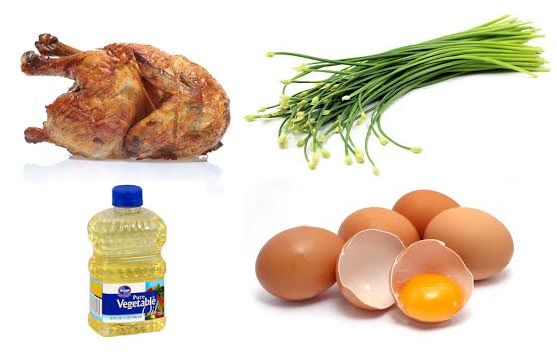
3 cups shredded rotisserie chicken

3 eggs, well beaten

2 tablespoons chives, chopped

2 teaspoons vegetable oil

Make an omelet with the eggs and chives.  Cut into 1/2-inch strips and set aside for assembly.

Vegetables:

veggies

2 carrots, julienned

1/2 yellow onion, sliced thinly

8 ounces mushrooms

1 tablespoon vegetable oil

 Aromatics:

aro

3 cloves garlic, minced

2 tablespoons grated ginger

1 large shallot, diced

 Sauce:

sauce

Whisk together

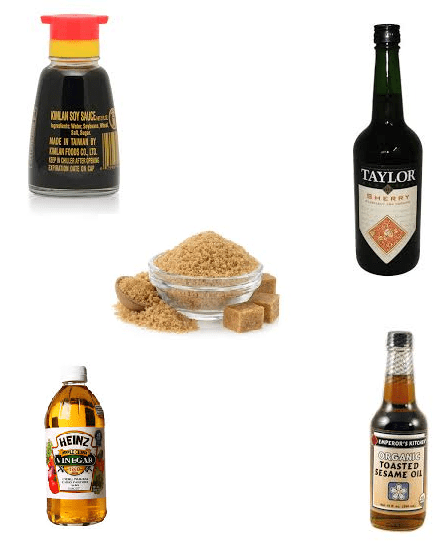
3/4 cup soy sauce

2 tablespoons toasted sesame oil

1 tablespoon brown sugar

1 tablespoon cider vinegar

1 tablespoon Sherry

 Finishing:

finish

2 cups raw spinach

1 cup frozen peas, thawed

 *Stir frying goes crazy fast once it gets started, so get all of your prep done before turning on the burner.

To cook:

If you don’t have a wok, get a very large, very heavy pot almost smoking hot.  Add 1 tablespoon oil to the pan.  Put in the carrots and mushrooms.  Cook for a couple of minutes, and when all the liquid has released and cooked out, add onions.  Cook for 30 seconds.

Stir in aromatics then immediately add the proteins.  Pour in sauce and toss.

When coated, pour in noodles, spinach, and thawed peas.  Gently mix to coat.

mei fun

Serves 6-8.

I’ve eaten this from a few Chinese restaurants.  But the more popular recipe is called Singapore Mei Fun.  It’s a reflection of the Indian population living in Singapore, and this version has curry.  As you can guess, because of my affliction, I do not have a good relationship with curry.

But if you would like, you are welcome to Singapore up this recipe with the addition of 1 ½ tablespoons curry powder and 3 dried bird’s eye chilis.

Bon Appetite, intrepid soul.

Thanks for your time.

Ally goat

“Walk away.  Just walk away.”

That’s a phrase one of my culinary heroes, Alton Brown, uses.  It’s meant to get the cook to back off and not overwork it or tweak it to death.  Like over mixing biscuit dough, developing the gluten, and ending up with tough, rubbery, inedible results.

It’s also what I tell myself when making mashed potatoes.

I mash them by hand with a good amount of butter.  When the spuds are mashed,  but still chunky, I mix in buttermilk, about ¾ cup at a time until they are just a little thinner than I’d like (they’ll tighten up while standing).  Then I cover them and walk away ‘til service; because if I continue to stir, I’ll develop the starch in the potatoes, and they’ll end up gluey.

But gluey can actually be a desired trait in a certain potato dish.

I love America’s Test Kitchen.  They have cookbooks, magazines, and a pair of PBS television shows.  Using theirCook’s Illustrated magazine, I finally got over my fear of cooking sugar; caramel, fudge, the whole candy thermometer megillah.  I also appreciate that if they offer a recipe, they have tested it into the ground.  One of The Kid’s culinary schoolmates was an America’s Test Kitchen intern and has verified that each dish was made with hundreds of variations to be assured of having the very best, most successful, recipe.

One Sunday afternoon I was watching an episode of ATK, and became extremely intrigued by a potato side dish they made.

It was called pommes aligot (pronounced “pom ally go”).  It’s a dish from the Aubrac region in France.  Aligot basically turns conventional mashed potato wisdom on its head.  The potatoes are whipped like crazy, cheese is added, and more stirring ensues.

The result is a rich, creamy, cheesy dish that is shiny and elastic.  The French sometimes use this as a dip for bread sticks and raw veggies, kind of like a fondue.

In France the dish is made with Tomme; a semi-soft cheese made in the Pyrenes and Alps regions.  It is almost impossible to find in the states.  Christopher Kimbel and the gang at the Test Kitchen came up with a gruyere/mozzarella combo to mimic flavor and texture.

I don’t buy a lot of Gruyere, and was pretty horrified by the prices.  I didn’t want to get too far off the reservation the first time I made the recipe, so I used Gruyere, but found a smoked version that was two bucks cheaper.  It added a nice, subtle smoky flavor to the finished dish.

Pommes Aligot

aligot

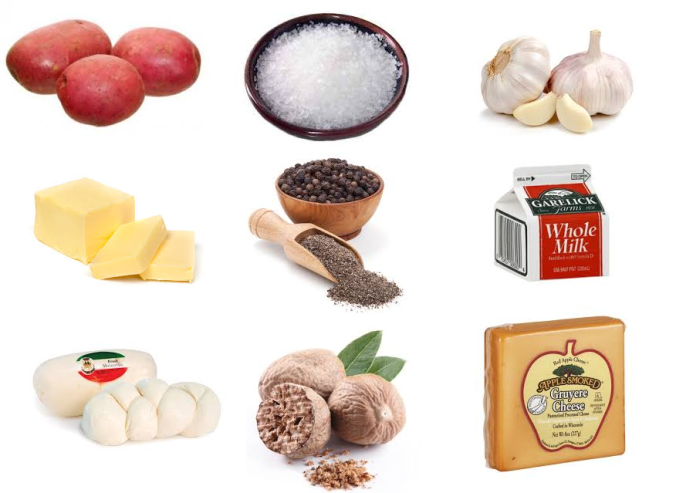
3 pounds red-skinned potatoes (6-8 medium)

3 tablespoon kosher salt + more for seasoning

Water to cook potatoes

2 cloves garlic, minced

6 tablespoons butter

1 cup whole milk

1 cup shredded smoked gruyere cheese

1 cup shredded mozzarella cheese

1/8 teaspoon freshly ground nutmeg (a big-gish pinch) 

1/4 teaspoon freshly cracked pepper

Peel the potatoes, cut them in half, then into 1/2-inch slices. Place in a large pot with 3 tablespoons of salt. Add water to cover the potatoes by at least an inch. Bring to a boil and cook for fifteen minutes or until easily pierced with a paring knife. Drain the water. Put the potatoes in a food processor with the minced garlic, salt to taste and the butter. Pulse a few times, add the milk, and pulse until smooth. Return the mixture to your pot and turn heat to medium. Sprinkle in nutmeg and pepper.  Slowly add the cheeses, stirring vigorously with a wooden spoon while doing so, over a period of 3-5 minutes, until stretchy, elastic consistency is achieved.  Check for seasoning.  Serves 8.

I made them on Sunday night with some Denver steaks I was lucky enough to catch on sale, along with peas and carrots.  It was a Valentine’s dinner that wowed Petey.  The spuds turn out glossy and gorgeous.

To be really honest they are at their most basic level, cheesy mashed potatoes.  But, the type of cheeses is unusual, and the method of preparation is fancier.  These are gorgeous, velvety mashed potatoes with a sexy French accent.

I googled “Sexy French”, and this rather attractive young man came up.  Is he French?  Don’t know, don’t care.

Thanks for your time.


Don’t let the cheese stand alone

Petey likes it simple; very basic, with no fanciness.  He’d be quietly satisfied if it was the same way every single time.

Sometimes simple is ok, but I really like to mix things up; today one way, tomorrow, another.  With me, variety is the spice of life.

I’m just talking grilled cheese here, folks.

An episode of “Chopped” on Food Network got me to thinking about grilled cheese.  A contestant decided to make a chicken pot pie grilled cheese sandwich.

Then she commenced to making a giant, gloppy mess of the whole thing.

She made chicken pot pie filling.  Then she cut some slices of brioche bread.  She filled it with pot pie stuff, slapped on a slice of cheese, and threw it, unbuttered, onto a ridged grill pan.

It didn’t brown, got stuck to the grill, and leaked all over.  She ended up shoveling it into a bowl and serving it to the judges like that,

Shockingly, she was chopped.

If she had really wanted to make a chicken pot pie grilled cheese, there were actually two ways that probably would’ve worked.  She should have made a very thick filling.  Then assembled it by using one slice of cheese on each slice of bread, spreading a layer of filling between them, and browning and crisping it in a non-stick pan.

Or alternatively, made two thin-ish grilled cheese sandwiches, cutting each in the shape of a gratin dish, and using them as the top and bottom crust of a traditional pot pie.

She would not have gotten chopped.

Even though a grilled cheese seems like the epitome of simple, it’s also simple to make a bad one.  You can burn it, over or under melt the cheese, or make it into an oil slick.  But with a few tips, a delicious, well-made sandwich is mere minutes away.

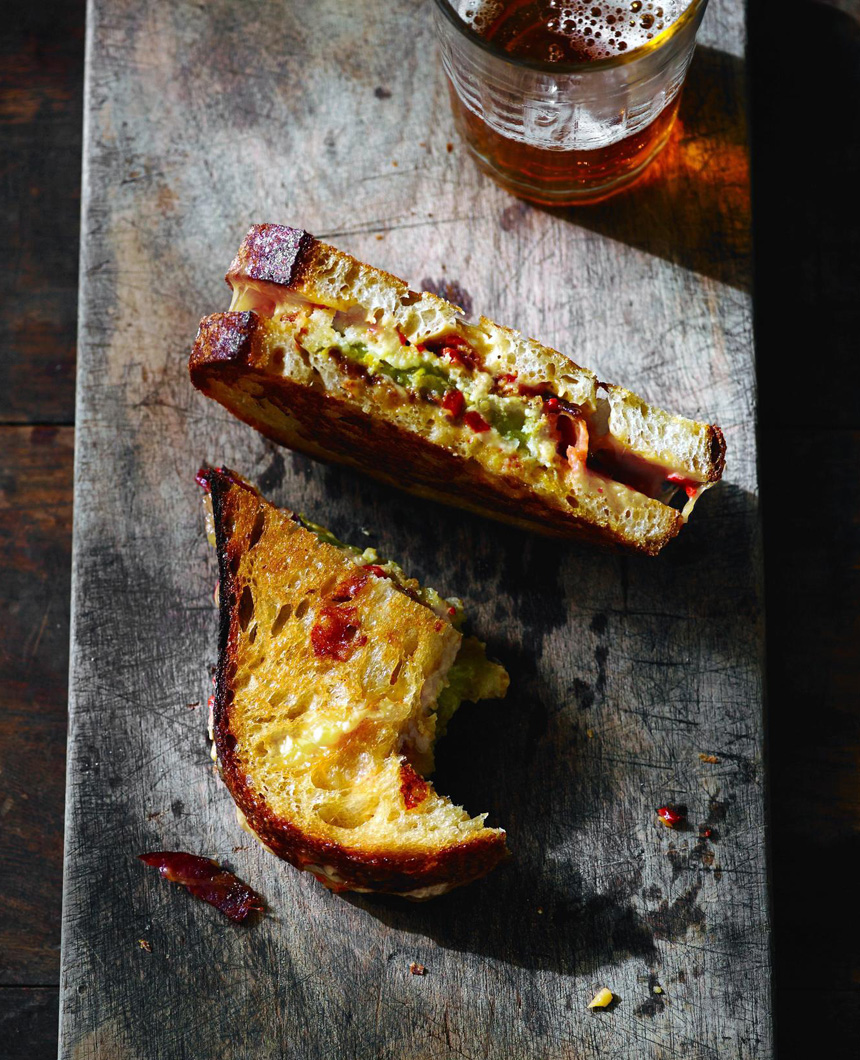
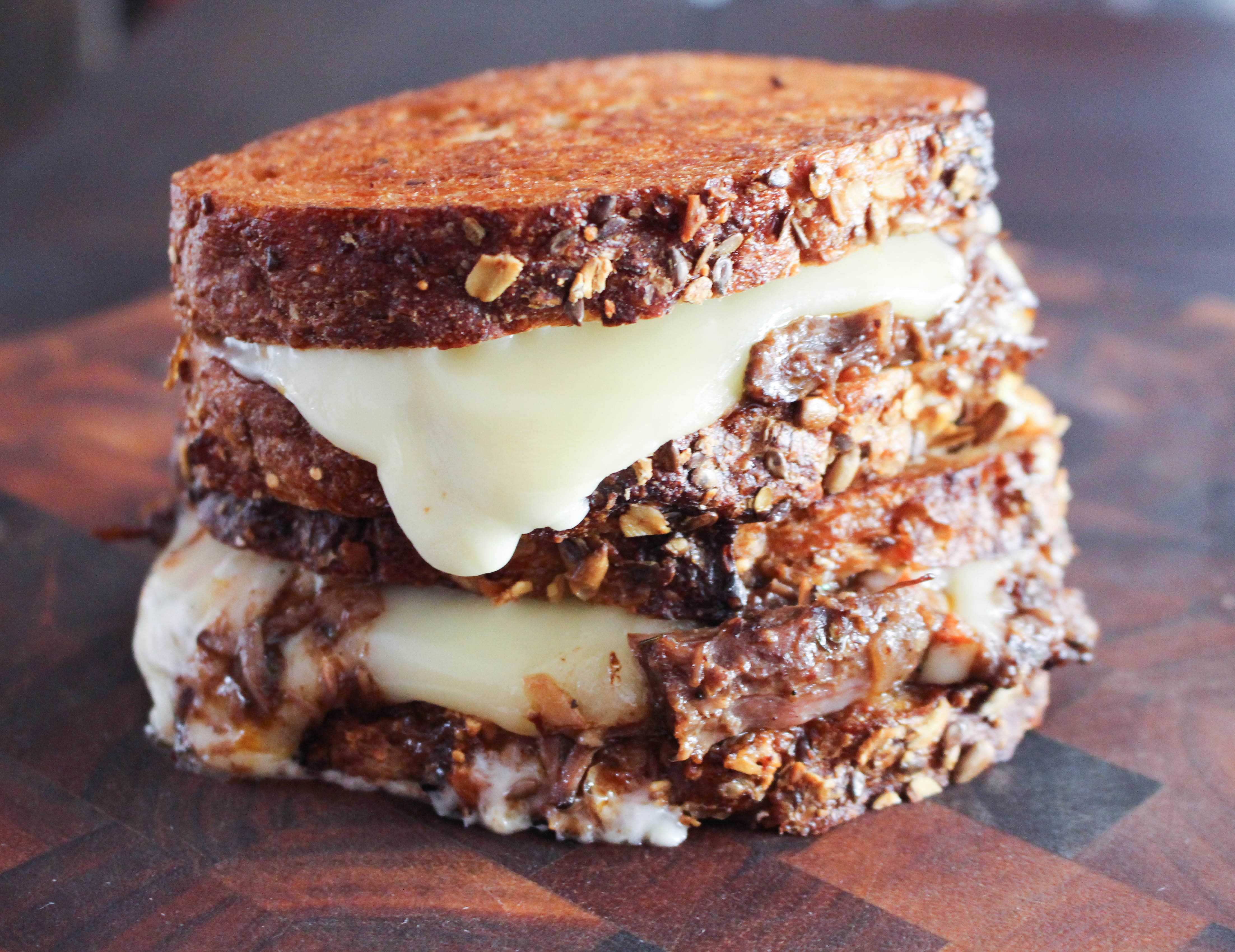
Break out your well-seasoned cast iron frying pan (or a heavy non-stick skillet), and set it on the burner at about medium-low.  Smear a very thin layer of mayo on one slice of bread.  The egg in the mayo will give the bread an almost French toast-like surface.  Place the bread mayo side down onto the heated skillet.  Layer on the cheese and any other fillings, starting and finishing with the cheese so it will act as a glue.

Put another thin layer of mayo on the other slice of bread and place on top, mayo side up.  Put a lid on the pan and cook for about 4-5 minutes.  Uncover pan, check and flip if the bottom slice of bread is browned and the cheese has started to melt.  Flip and cook until the other side is browned and crispy.

Remove and let sit for a couple minutes then slice and serve.

If you’re Petey, you pick Velveeta on Wonder Bread.

But…

Here are a few ideas if you’d like to shake things up:

The Kid likes fried green tomatoes, bacon and pimento cheese on a hearty homemade white made with a touch of cornmeal.  Or crazy sharp cheddar on chewy, mouth-puckering sourdough.

I like caramelized onion and goat cheese on French baguette. And also sautéed mushrooms, short ribs and Laughing Cow on Hawaiian bread.

So here’s my advice: go to the fancy cheese store, and buy some new interesting types.  Then go to a good bakery and get a couple loaves of funky breads.  Visit the produce department, and pick up some guest stars.

Then go into your kitchen and have a grilled cheese party.  No RSVP required.

Thanks for your time.

Fry baby, fry

McDonald’s is being sued.

They’ve recently begun selling mozzarella sticks.  It seems that instead of piping hot, breaded planks of cheese, numerous patrons have been presented with hollow cylinders of sadness—no cheese.

The corporate explanation: “In these instances, we believe the cheese melted out during the baking process in our kitchens and shouldn’t have been served,”

My guess is that at some point the sticks may have had a very brief sojourn in an oven; either in the facility that prepares food to be shipped out to local restaurants, or in the store itself.  But make no mistake, those things also spent some time in a bubbling oil Jacuzzi.  Or should have, anyway.

First the bad news about frying.

My personal pet peeve is that frying’s messy.  Oil is greasy, and the bubbling fat produces tiny little droplets that float through the air and coat everything (including people) in the kitchen.  I always shower after frying and as soon as the hot water hits me I smell like the corn dog stand at the state fair.  Yuck.

It’s not the healthiest method of cooking.  No matter how you do it, fried food will absorb some fats.  It just will.  This can be mitigated though.  Use unsaturated plant-based fats.  Animal fats are the culinary equivalent of Bacardi 151.  This is the kind of thing that should only be indulged in once or twice a year, if ever.

He likes duck fat fries too…

Frying is really east to screw up.  When Petey and I were first married, I decided to make fries from scratch, and fry them up.  Unfortunately I’d never asked anyone how to do this.  So, I put a big pot on the burner, poured in about $10 worth of oil (a ton of money back then), and turned on the burner.

After about five minutes, I dumped in all of my hand cut fries.  There was nothing.  Those puppies sunk into that oil with barely a ripple, let alone the all-important bubbling and sizzling sounds.

I was flabbergasted when 15 minutes later I pulled out potatoes which were colorless, limp, and as greasy as a seventies disco owner, only no hairy chest and gold medallion peeking out from a half-buttoned polyester shirt.  They were inedible, and I wasted a bucket of food.

This is what my poor fries looked like.

It was literally years before I tried deep-frying again.  By that time, I understood the science of cooking in general, and frying specifically much better.

Like hot air, boiling water, fire, and steam, that bubbling oil is merely the medium to transmit heat into the food.  Hot oil is just about the most efficient method.  Unlike water which boils at 212, the correct temp for frying is 350 degrees.  That is 65% higher.  Unlike baking or grilling, oil completely surrounds the food, which cooks it quicker, and more evenly.

Here’s what happens when you fry.

When the food enters the oil, the surface moisture is turned into steam; thus the bubbles.  As it cooks the heat is transferred into the interior, cooking off more moisture.  If the temp is correct, and the food not too dense, when the exterior is golden, the interior is cooked through.  Also all the surface water is gone, giving you that addictive crispy mouth-feel.

If you listen closely, you can hear angels singing.

All oil has something called a smoke point.  It is the temp at which the oil begins to break down.  It will smoke, the food will taste funny, and dangerous, carcinogenic compounds will be formed.  This food will basically be funky tasting poison.  Olive oil has a very low smoke point, so bad for frying, peanut oil high; so good.

Temp is not only important at the start; you also want to control something called recovery time.  That is the time it takes for the oil to come back up to temp after you put food into the oil.  So, you don’t want to put too much in at one time—this will lower the temp so much that it may never heat back up, and you will end up with greasy, soggy, thoroughly unpleasant fried food.

And if you’re going to turn your kitchen into an oil slick, and risk ruination of your heart and waistline, at least do it right.

Thanks for your time.