
Remember when you were in school and the best two words that could be spoken or heard were, “pizza party”?
Yeah, it didn’t move me. The trouble is that red sauce.

I was raised on it. My mom was famous for her all-day, slow-cooked spaghettie sauce. When my friends ate dinner with us and spaghetti was on the menu, they were lost. They spent the rest of their lives chasing that red, garlic-scented dragon.
For me though, after seventeen or eighteen gallons of it, the bloom was definitely off the pasta rose. I’m just not a fan.

But, as you may know, Gentle Reader, I am first in line for bread. And made well, pizza crust is a glorious celebration of yeast and gluten. I make foccacia with my sourdough starter and use it as pizza crust. My toppings of choice are marsalla onion jam, shatteringly crispy shards of bacon, and fresh mozzerella or goat cheese—no red sauce.

Turns out my pizza dressing is a very close cousin to the French pissaladière, except I use bacon instead of anchovies (Bacon rather than little smelly fish? Duh.).
This focaccia is a yeast, rather than sourdough version that The Kid makes all the time. It’s an adaptaion from a recipe that comes from the website, Serious Eats.

Thanks for your time.
Contact debbie at dm@bullcity.mom.
Cast Iron Pissaladière-ish
Ingredients
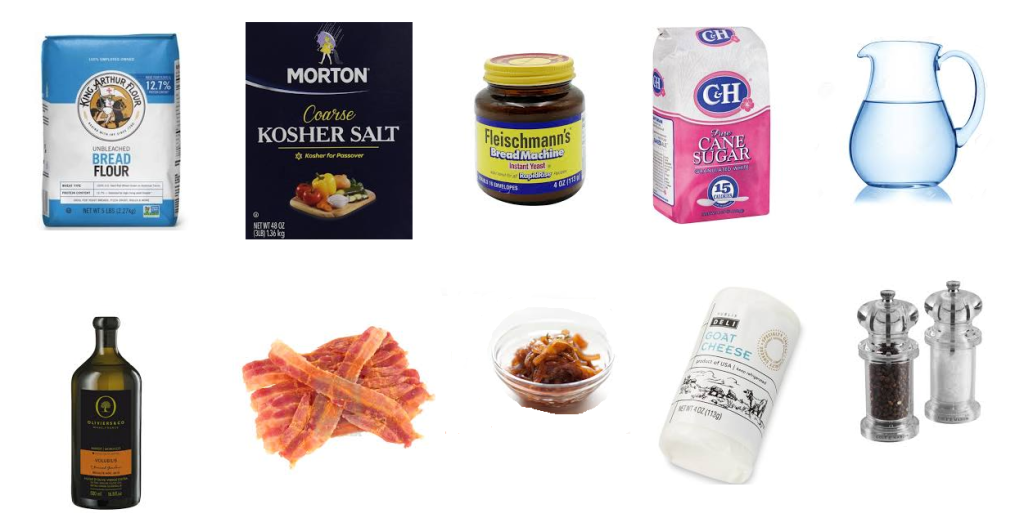
3 & ¼ cups all-purpose or bread flour
1 tablespoon kosher salt
1 teaspoon instant yeast
1 tablespoon sugar
1 ½ cups minus 1 tablespoon water
¼ cup extra-virgin olive oil, divided
5 slices bacon, cooked crisp and broken into large shards
¼ cup deeply caramelized onions
1/3 cup crumbled goat cheese
Coarse sea salt freshly cracked pepper
Combine flour, salt, sugar, yeast, and water in large bowl. Mix with hands or wooden spoon until no dry flour remains. The bowl should be 4 to 6 times the volume of dough for rising.
Cover bowl tightly with plastic wrap, making sure edges are well-sealed, then let rest on countertop for 8-24 hours. Dough should rise dramatically and fill bowl.

Sprinkle top of dough lightly with flour, then transfer to lightly-floured work surface. Form into ball by holding it with well-floured hands and tucking dough underneath itself, rotating until it forms tight ball.
Pour half of oil in bottom of large cast iron skillet. Transfer dough to pan, turn to coat in oil, and position seam-side-down. Using flat palm, press dough around skillet, flattening it slightly and spreading oil around entire bottom and edges of pan. Cover tightly with plastic wrap and let dough stand at room temperature 2 hours. After first hour, preheat oven to 550°F.
After 2 hours, dough should mostly fill skillet up to edge. Use fingertips to press it around until it fills every corner, popping any large bubbles that appear. Lift up one edge of the dough to let air bubbles underneath escape and repeat, moving around the dough until there are no air bubbles left underneath and it’s evenly spread around skillet. Spread onions and bacon over surface of dough, dot with cheese, and press down with fingertips to embed slightly. Drizzle with remaining olive oil. Sprinkle with coarse salt.
Transfer skillet to oven and bake until top’s golden brown and bubbly and bottom’s golden brown and crisp when you lift with spatula, 16-24 minutes. Using a thin spatula, loosen focaccia and peek underneath. If bottom is not as crisp as desired, place pan on burner and cook over medium heat, moving pan around to cook evenly until crisp, 1 to 3 minutes. Transfer to cutting board, allow to cool slightly, slice, and serve. Leftovers can be reheated on rack at 300°.

 Yeah, you thought the holidays were over, but not quite.
 In honor of this cheesy celebration, today’s essay will be all about what Webster calls, “a food consisting of the coagulated, compressed, and usually ripened curd of milk separated from the whey” (I think that last sentence is iron-clad proof that the first person to eat cheese tasted it before hearing the definition).
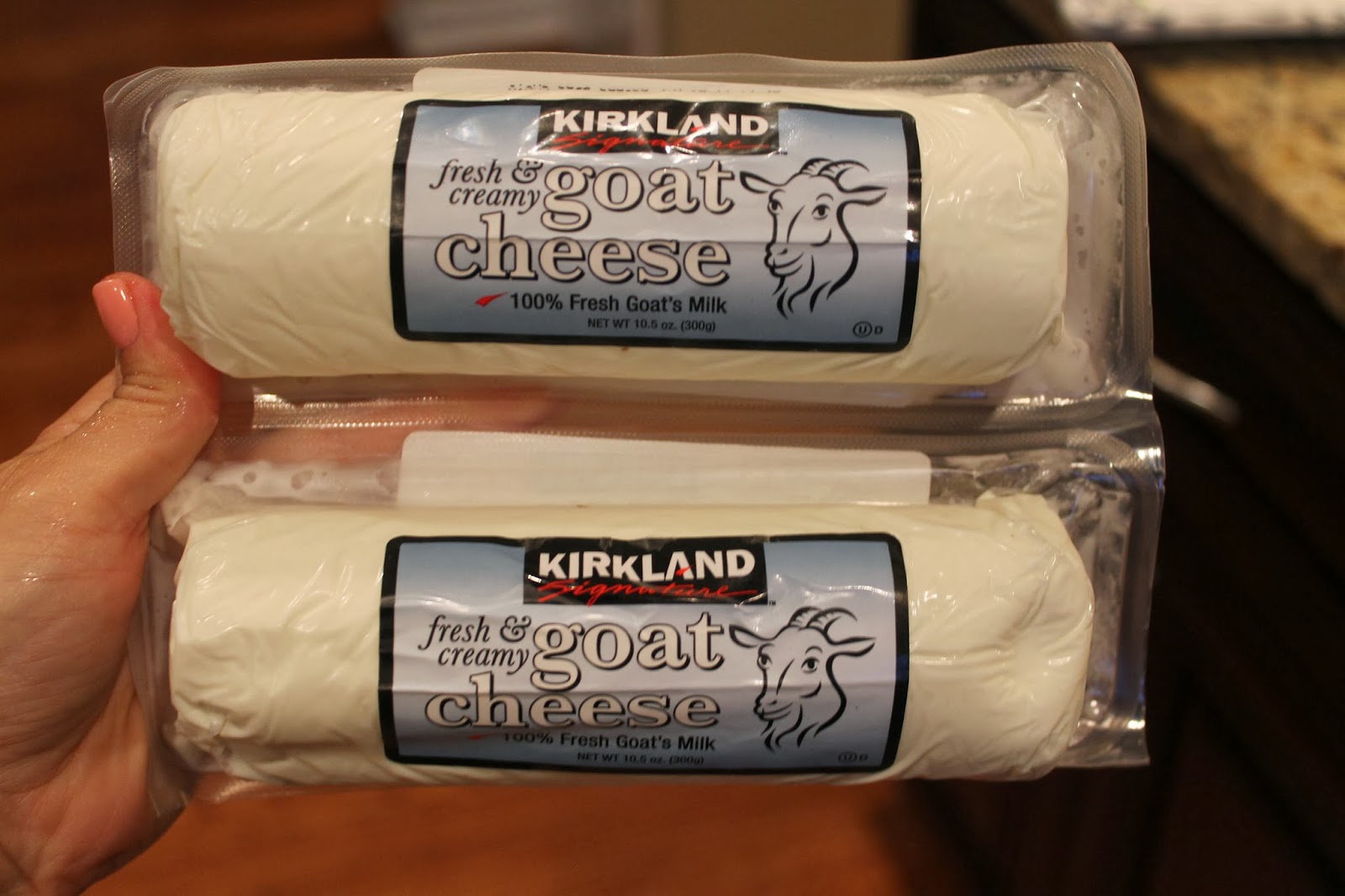 On any given month, I eat my weight in goat cheese. I love it on mixed baby greens along with toasted pecans, dried cherries, and shaved onion, very lightly dressed with balsamic dressing. Toast, a sandwich restaurant in Durham, schmears it on sliced baguette, drizzles on a little honey, and finishes with a sprinkling of freshly cracked black pepper.
 You can fry some types of cheese, and I’m not talking breaded, deep-fried awfulness you might find on the appetizer menu at Uncle Moe’s Family Feedbag. This version is sliced and toasted in a dry skillet. It’s an addictive treat that The Kid has adored for years.
 Another cheese that’s out of the ordinary but is becoming a little more common is burrata. Burrata is the piñata of the cheese world. A balloon of mozzarella is filled with stracciatella cheese and cream. Stracciatella is fresh cheese curds which are stretched and shredded.
 But lots of stores like Southern Season and Whole Foods, as well as the interwebs sell kits, with everything you need to make like Little Miss Muffet.

 It’s an egg dish which is a culinary marriage of Italy and France.
 You then place the filling on the dough, leaving a two-inch border around the edge. The edge is folded up and painted with an egg wash. If it’s a sweet galette, sugar is sprinkled over the whole confection, and it’s baked to golden perfection. A savory version is made the same way, only sprinkled with salt, pepper, and any herbs or spices desired.
 Like I said, pie is a gift from the culinary gods, but the second type of galette has to my favorite…it’s taters. If I had to give up either pie or spuds forever, it would be goodbye pie.
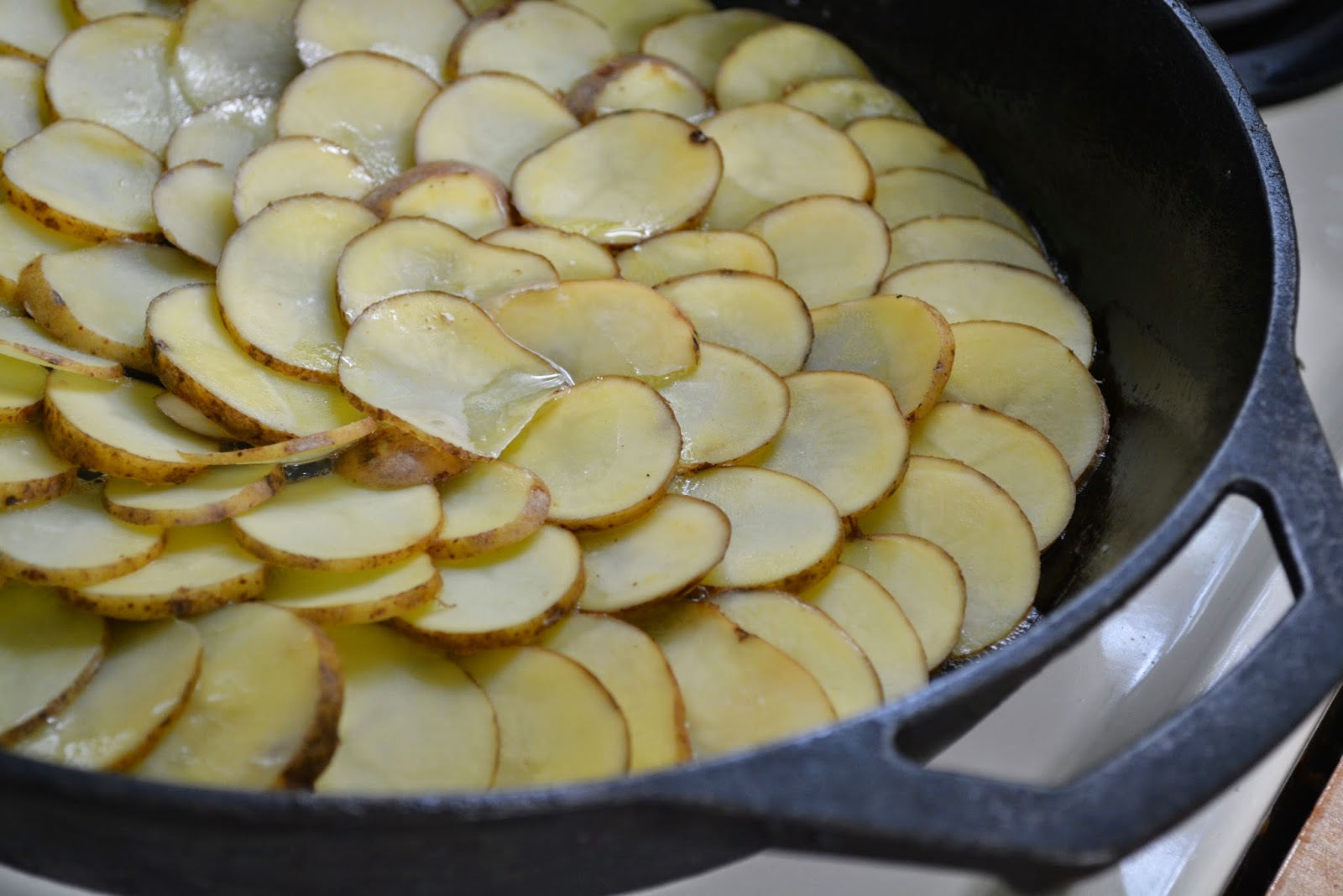 With a traditional galette, you brown the first side, then place a plate over the skillet, flip it, return it to the pan cooked side up, and brown the bottom.
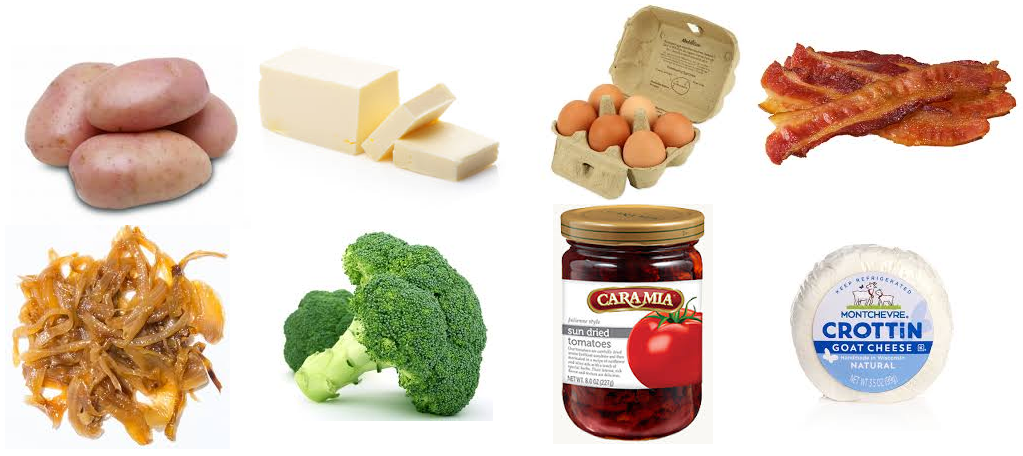 Sprinkle the top with crumbled goat cheese. Then set the pan in the oven under a low broiler until the frittata is just set, and it’s puffed and very lightly golden. Remove from oven, slide it onto a serving platter, let it sit for a minute or two, then slice and serve. It will feed six. It’s actually good cold, so leftovers make a great lunch the next day.
 Thanks for your time.
 I’ve been wanting to do it for a while, but I really wanted to add goat cheese. Goat cheese, though, can be expensive; especially in an experimental dish where it might end up decorating the inside of a trash can, rather than the inside of me.
 This dish is also having a moment. Savory oatmeal is big in two catagories; savory porridge and grain bowls. Both are as trendy as statement sleeves, platform shoes, and Mondrian-like graphics.
 Except, never in savory form.
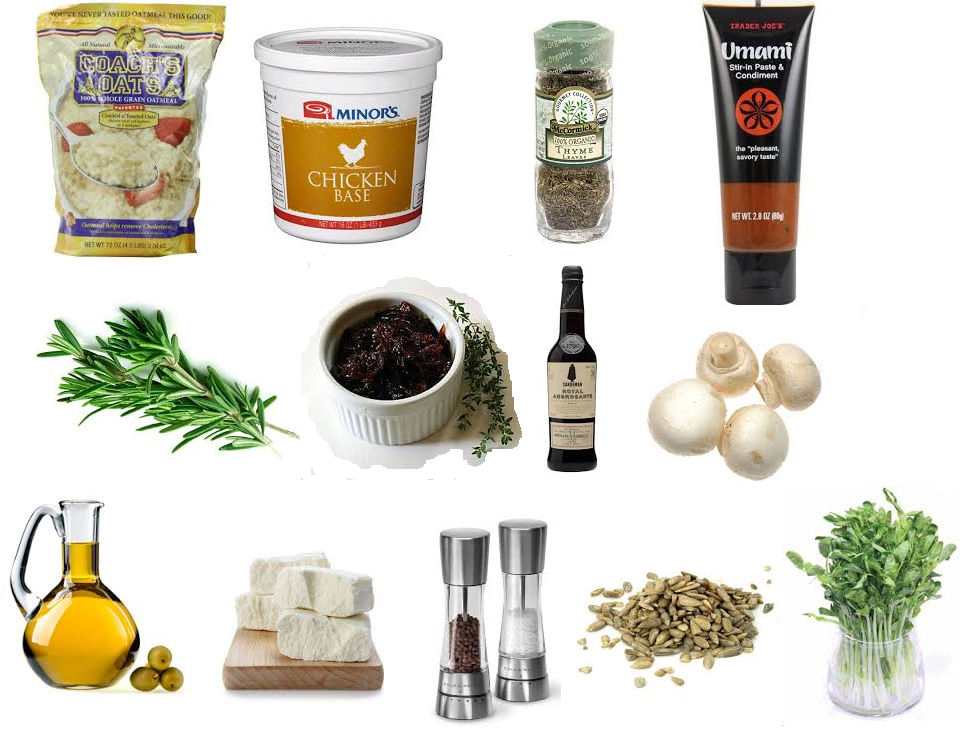 2 servings oats, uncooked
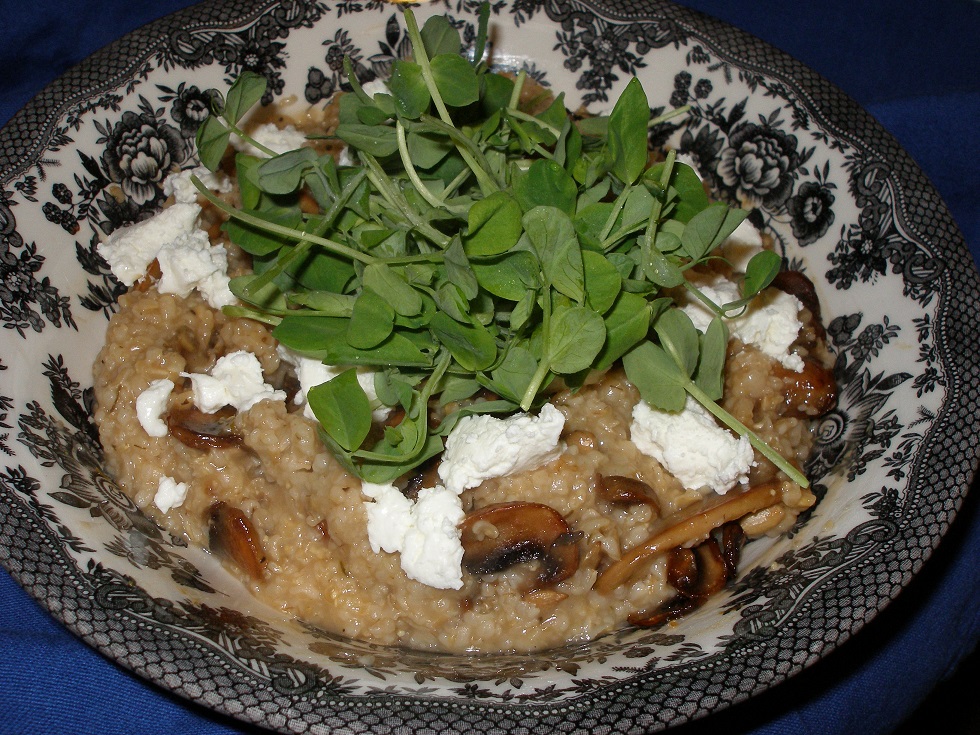 When ready to make oats, cook in broth according to directions. When finished cooking, check for seasoning, stir in onions, mushrooms, and sunflower seeds. Plate, then top with bits of goat cheese, and a big pile of pea shoots. Serves two as a side, or one as a main dish.
  Thanks for your time.
 bull city mom