 No matter where, or when, if I’m eating out and there are Eggs Benedict on the menu, I order it. And I always ask for extra Hollandaise.
When I am lucky enough to have potato salad on my plate, I eat everything else then slowly, savoring each bite, consume my potato salad. What do these facts say about me?
- That if I can see the finish line and the wait isn’t too long, I enjoy a small amount of not-too-delayed gratification.
- I’m a big fan of silky, well-made emulsification.
This is the fifth and final week of our mother sauce series. We are wrapping up with my very favorite, Hollandaise. And although some people might disagree, The Kid and I firmly believe that because of the emulsification in the making of it, mayonnaise belongs in this category as a sort of step-daughter/about/Homemade-Mayonnaise-Recipe-56a8d3655f9b58b7d0f57c0d.jpg) The info on this sauce is all over the place. It was either invented in the 1600’s or maybe the 1700’s. Hollandaise is named for the region in Netherlands, either because it was invented there, or because Holland has the best eggs and butter, which are the two main ingredients.
The info on this sauce is all over the place. It was either invented in the 1600’s or maybe the 1700’s. Hollandaise is named for the region in Netherlands, either because it was invented there, or because Holland has the best eggs and butter, which are the two main ingredients.
Traditionally, Hollandaise sauce is not the easiest of mothers. It involves a double-boiler and whisking raw eggs over heat while retaining the smooth silky texture. There are few tragedies as heart-rending as the sight of curdled or separated Hollandaise.
So just don’t make it at home, right?
Wrong. Long ago, my mom belonged to a book club. Not the kind where you sit around in somebody’s living room drinking pinot and discussing the latest Oprah pick. Books came in the mail.
One month it was a cookbook; The New York Times International Cookbook by Craig Claiborne.  Years later, Mom gave it to me. I had no idea that the author was considered one of this country’s all-time best food writers. I also didn’t have a clue that one day I would be a food writer myself. But, as an extreme novice in the kitchen, I took help and inspiration wherever I found it.
One day while perusing said cookbook, I stumbled upon a recipe for Hollandaise that to me, looked pretty doable. Instead of the usual procedure that came with a huge possibility of inedible failure, it was made in a blender.
Craig Claiborne’s Blender Hollandaise Makes 4 servings.
Heat one-half cup butter to bubbling; do not brown. Into container of an electric blender, put two egg yolks, two tablespoons lemon juice, one-quarter teaspoon salt and a pinch of cayenne. Flick motor quickly on and off twice at high speed. Remove cover, turn motor on high and add butter gradually, until mixture thickens. If too thick, add cold water. Serve with vegetables, fish or eggs.
So it looks like you’ve got raw egg yolks in the sauce. And if you are a child, pregnant, or have a compromised immune system, just steer clear.
But.
To get the butter nice and bubbly, shoot for 200 degrees (F). An egg yolk is considered cooked enough to be safe at 145. The hot butter and the friction from blending should put the yolks clearly in the “safe” category.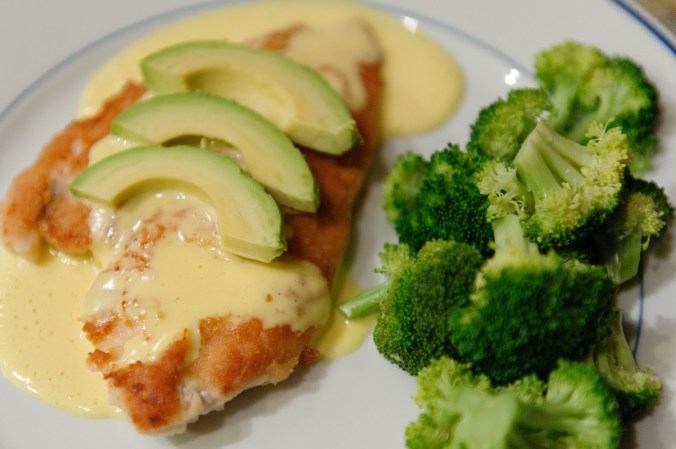 Like Craig says, the sauce goes great on veggies, fish, and eggs. But I love it on fried, boneless, skinless chicken breasts and it’s crazy good on any type of pasta.
If you’re like me though, it doesn’t have to be all fancy-fied. Forget the vessel on which to put it. Just chug it right out of the blender. Thanks for your time.
 I really dislike coconut. The flavor is actually okay, especially in piña coladas made even more decadent with lots of ice cream. For me it’s a texture thing. The Kid, however, has no such exceptions. Coconut is dietary anathema. It does not pass my child’s lips in any form.
 His favorite dessert has to be coconut cake, with many layers, lots of pastry cream filling and tons of 7-minute frosting. And each component jam-packed with sweet, white shreds of coconut. The man has a sweet tooth. As do I.
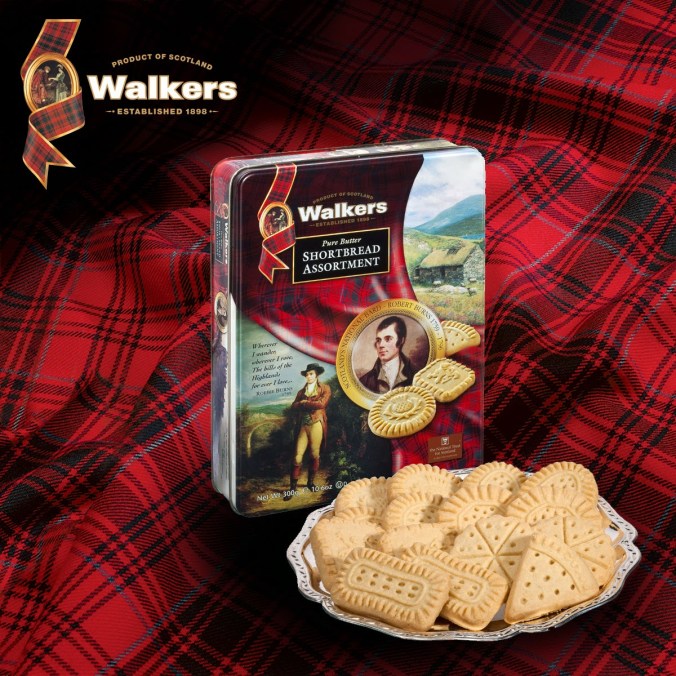 The Kid does though, have a big crush on shortbread. Walker’s, the brand with the red plaid boxes are a special favorite. Last year I made some for the child’s stocking. That recipe was okay, but wasn’t as rich and buttery as Walker’s.
 Before baking, I cut the 9 X 13 pan of cookies into 40 pieces. There were ten on the short side and four on the long; long rectangles which are called ‘fingers’.
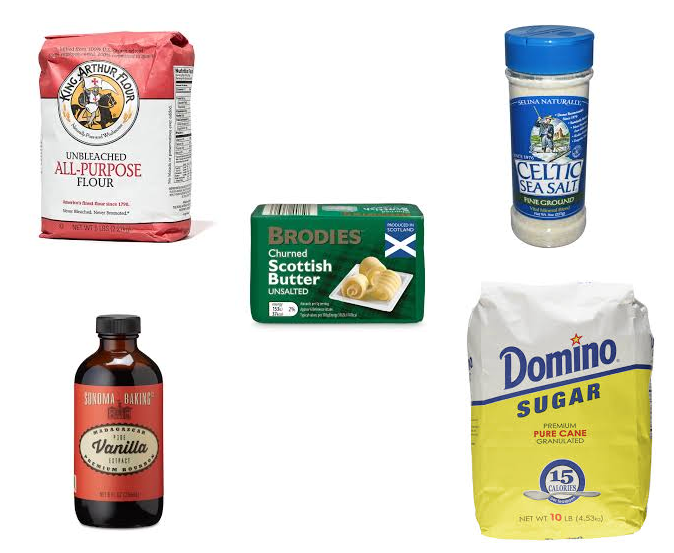 1 1/3 cups (2 sticks plus 6 tablespoons) butter, room temperature, plus more for pans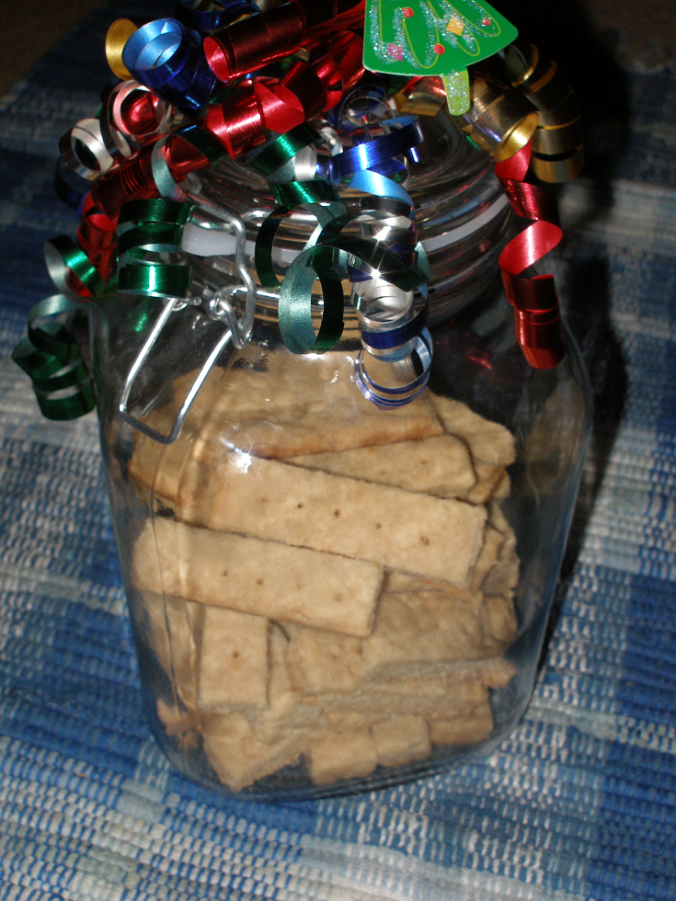
 In the case of shortbread, less is most definitely more.










 bull city mom