Sweet Dreams

Did you ever have one of those dreams where you’re in a bakery or candy store surrounded by treats?  And you can’t decide what you’re gonna start with?  And right before you take the first bite you wake up?

Yeah, that happened to me.  I was sitting at a table in Chapel Hill, looking down at eight different gorgeous sweet treats.  Only this time, nobody was shaking me awake to take out the dog, or catch the school bus, or get ready for work.

I was awake and got to partake.

But before I take a bite, I should probably go back to the very beginning.

Chef James Clark is executive chef of the Crossroads Restaurant in the beautiful and historic Carolina Inn on the campus of UNC.  I met him right after he started there.  I can truthfully say that his friendship is one of the best things to have come from writing this column.

He has three main characteristics that make him particularly well-suited to his position.

1.) He is a nurturing host.  It all boils down to his desire to take care of people.  He observes his staff and guests with a paternal eye.  He desires to bring the best out of his employees by teaching and encouraging, rather than shaming and berating.  Toward every hotel and restaurant guest, he strives to exceed all of their desires and fulfill wishes they didn’t even know they possessed.

I have never left his kingdom without being full of delicious food, and delighted by the way that he can always add one more element to my time there that is both a complete surprise to me and just the right thing to make a visit unforgettably special; it’s Chef James’ modus operandi

Image result for chef james clark

Madison Clark, and dad James.

2.) He is a good old Southern boy.  With all his heart he loves the food and culture of the South.  Chef reveres the creativity and skill of the generations before him.  He honors their history by getting the very best local ingredients, manipulating them with talent and a sense of history, and coaxing out the very best of each component.

3.) The man’s a world-class, classically trained chef.  Once you’ve learned and studied all the rules, then if you have the expertise and imagination you can play with them.  And Chef James has lots of fun in the kitchen.  He takes a common, old-fashioned recipe, elevates the ingredients and procedure, and turns out an homage to classic Southern fare.

But don’t confuse classic with stuffy.  Chef James may be a dignified executive chef, but from him, you’ll get absolutely no love for swank and pretense.

His take on Eastern NC bbq is a perfect example.  The plate comes with an old-school, pointy-topped vinegar bottle of sauce.  There’s pork, but a perfectly seared and juicy tenderloin.  The cole slaw is a bright yet sweet slaw of spiral cut veg.  Sous Chef Jonathon James’ take on cornbread is a delicious, sweet, zippy corn pudding.

Corn Poblano Pudding
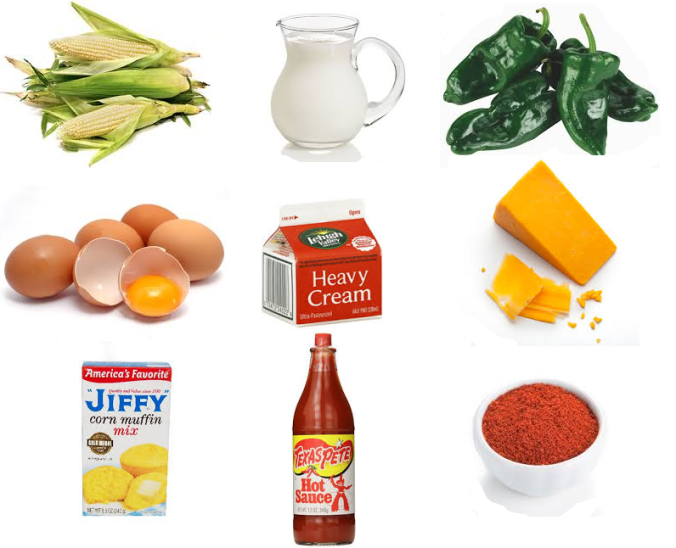
corn puddingCorn Base:

1 Cup Fresh Corn                                                                                             

1 Cup Whole Milk                                                                                             

Caramelize corn in a hot medium sauté pan, deglaze milk reduce by a ¼. Blend on high until smooth but some of the texture of the corn remains

Pudding:

1 ½ Cup Corn base    

1 Poblano Pepper, roasted (charred skin and seeds removed, then diced)

8 Eggs

1 Cup Heavy Cream   

2 Tablespoons Chili Powder 

1 ½ Cups Cheddar Cheese (grated)  

¾ – 1 Cup Corn Muffin Mix (*Debbie here—I would go with something like Jiffy)                                                                                        

Salt & Pepper To Taste

Combine all ingredients and mix thoroughly. Preheat oven to 350 degrees with the cast iron vessel you are using to bake pudding in so it is hot when time to bake. Spray vessel well and bake approx.. 15 minutes. Top should bounce to the touch.

There just isn’t enough room in this piece to tell you all about Petey and Debbie’s excellent adventure.  So next week  I’ll write more tales of our night, including the world’s greatest pasta course, how I ate some of each seafood that arrived at our table, and what I did with all those desserts (and no, I didn’t leave Petey for all that sugary bounty—he’s sitting here right next to me).

 

OLYMPUS DIGITAL CAMERA

See?  He’s just fine.

Thanks for your time.


Hail to the chef

In 1939, when King George VI and Queen Mary visited the US, President and Mrs. Roosevelt had a picnic for them at Hyde Park and served hot dogs.

People were shocked, but the king and queen loved it.

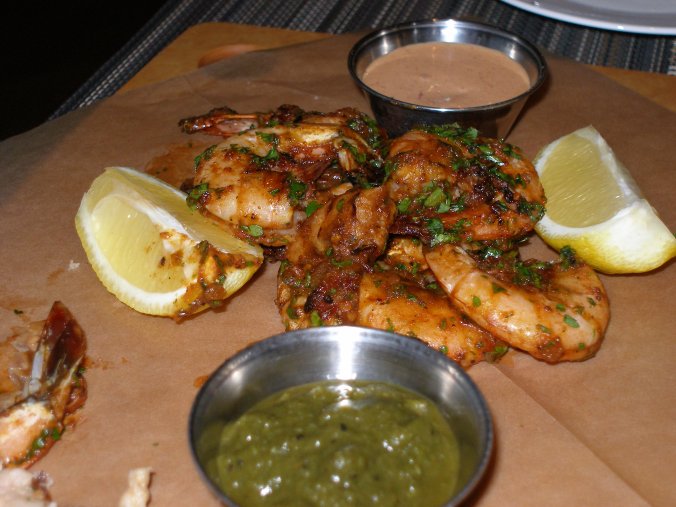
In 2016 when the pampered and privileged visit Chapel Hill’s Crossroads restaurant in the Carolina Inn, they can roll up their sleeves, get their hands dirty and eat roasted peel & eat shrimp; covered with spice and served with green tomato cocktail and comeback sauces.

People are charmed, and everybody loves it.

The surroundings are beautiful and historic, the service is warm but faultless, and the ingredients are top quality and thoughtfully sourced.  But James Clark, executive chef of the Crossroads has no patience for fussy fine dining and the atmosphere it creates.

The Carolina Inn-I kind of expect the Tarleton twins to be lounging on that porch.

I’ve known Chef James since he was hired, about 3 ½ years ago.  When I heard about him, I was very interested in meeting him.  He’s from Elizabeth City, as am I.  And, he attended culinary school at the New England Culinary Institute, in Vermont, which is The Kid’s alma mater.

IMG_0138

The Kid–trying to look demented and done up in NECI gear.

We ultimately met at a reception introducing him as executive chef.  True to Chef, he catered his own wing-ding.  Luckily for every guest in attendance, he catered his own wing-ding.  The first thing he ever fed me was a fluffy, buttery biscuit, and nestled within was a piece of perfectly slow-cooked and rendered pork belly (I stuck one in my pocket, and took it to Petey—who loved it).

Last week he invited Petey and me to the Carolina to celebrate my birthday and sample his new spring menu.  Instead of ordering, I asked the chef if he would choose for us.  Our palates and bellies would be in his talented, capable hands.

Chef divides his menu into “Sharing Plates”, “Small Plates”, and “Large Plates”.  Dishes were set in front of either Petey or me, but we shared everything.

OLYMPUS DIGITAL CAMERA

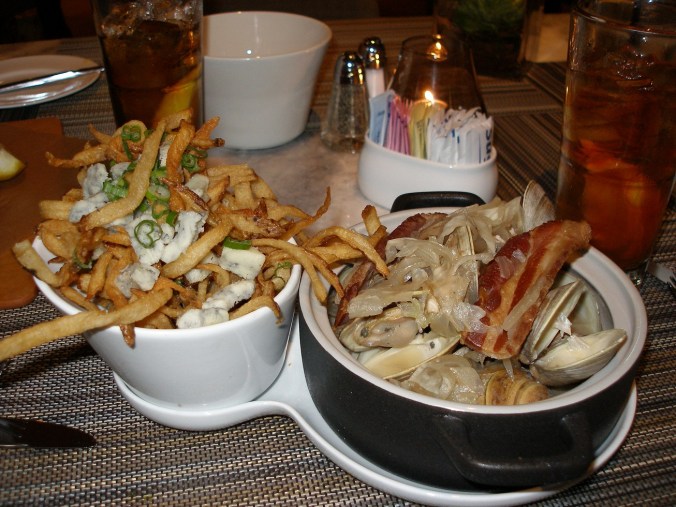
Clam frites.

The first course was clam frites and his peel & eat shrimp.   The clams were cooked in their own shell and flavored with bacon and fennel.  Also included was a big vessel of fresh-cut fries spiked with tangy yet mellow Carolina Bleu cheese. The shrimp were perfectly cooked, delicious, and messy fun.  They were served with a green tomato cocktail sauce which was developed by his Chef de Cuisine, Jonathan James.

It’s great for all sorts of things.

Green Tomato Cocktail Sauce

Green Tomato Ketchup Base:

green ketchup

4 Cups Green Tomatoes                                                                              

3 Tablespoon Worcestershire Sauce                                                                     

1 Cup Apple Cider Vinegar                                                                          

3 Tablespoons Texas Pete                                                                                          

½ medium sized onion (julienned)                                                                                 

2 Tablespoons garlic (minced)                                                                                  

¼ cup brown Sugar                                                                                       

¼ cup granulated Sugar                                                                                        

2 tablespoons salt                                                                                                       

1 tablespoon pepper                                                                                                                            

½ cup water

Combine all ingredients in medium heavy bottomed pot, bring to a boil reduce to a simmer. Reduce in volume by half. Cool and blend on high until smooth. If the base is not bright you can add a drop or so of green food coloring to bring back the color.

Cocktail Sauce:

green cocktail

3 ½ cups Green Tomato Ketchup Base                                                            

¼-½ cup Horseradish, depending on taste

Juice from 1 lemon

5-8 dashes Texas Pete                                                                                            

Salt & Pepper to taste

Stir ingredients together.  Makes approximately 4 cups.  Store leftovers in the fridge, or place in zip-top bags and freeze flat.

OLYMPUS DIGITAL CAMERA

The peel & eat experience.

Space prohibits me from divulging more about our meal in this column.  But next week is the sequel with another delicious, do-able recipe from the kitchens of the Carolina Crossroads, and the minds of Chef James and his uber-talented staff.

Thanks for your time.

Kitchen prestidigitation

I’m not sure what will happen.

The Kid no longer eats orzo.  “It’s a texture thing,” my child insists.

I, on the other hand, love the rice-shaped pasta.  It works really well with a light dressing, and smaller pieces of veggies and proteins.  For some reason I equate it to the spring, with lemon, asparagus, and ramps.

By disliking orzo, The Kid has ended up on the horns of a dilemma.  I recently discovered an orzo recipe that will send my spawn into vapors of indecision.

For while the recipe is a one-pot, no strain pasta, which is pretty darn cool, that pasta is orzo, which usually given no love.

The other dilemma that may change everything is the author of the recipe.  It is Melissa D’Arabian, winner of Food Network’s Next Network star.

The year that Melissa competed, we watched every episode, and Melissa caught our eye.   She wasn’t loud or a drama queen, in fact she seemed to have no time for crazy.

What riveted us to the screen was her quiet confidence.

In that she reminded us of JJ Redick.  When he goes up for a shot, in his mind, of course he’ll make it; he’s never missed.  It’s not delusion or ego-driven arrogance, it’s more like a child’s belief in the good in himself—in his mind he’s never missed a basket, so he launches the ball with nothing but complete, untainted optimism.  The “Yips” are incomprehensible to him.  It would be like trying to explain the concept of electrical engineering to a gerbil.

My round ball crush, JJ Redick.

Melissa was like that.  She had knowledge, experience and a stack of awesome, no-fail recipes tall enough to reach the top shelf.  Above all she possessed a quiet form of supreme confidence.  Doubt didn’t seem to be in her vocabulary.

But back to the orzo.  This recipe is like a ski lodge in the summer—it’s very accommodating.  You can add anything to this dish; protein, different types of veg, various nuts.

Petey and I love this, but The Kid has not yet had an opportunity to try it.

Melissa’s Lemon Thyme Orzo (by way of Debbie)

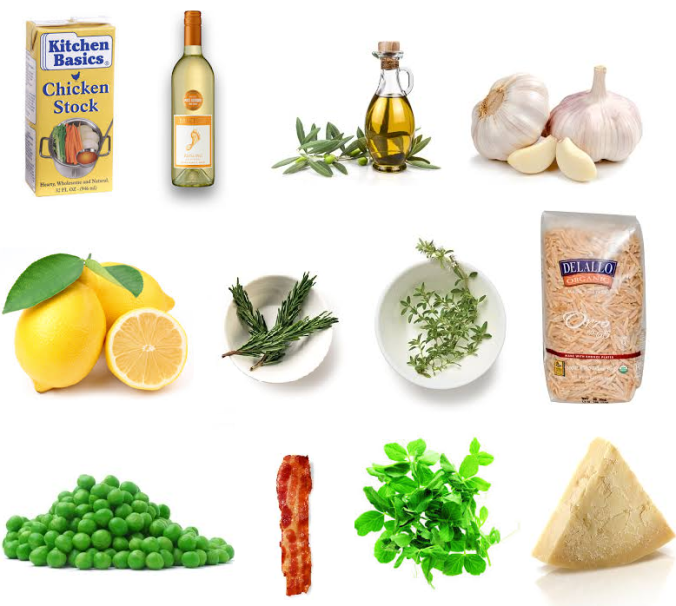
lemon thyme orzoIngredients
2 ½ cups chicken or vegetable stock

½ cup white wine

1 tablespoon olive oil

2-3 garlic cloves, minced

1 cup orzo

½ lemon, zested + 2 tablespoons juice

2 tablespoons fresh chopped thyme leaves

2 teaspoons fresh minced rosemary

1 cup frozen peas

1/3 cup shredded Parmesan

Salt and freshly cracked black pepper

¼-½ cup crumbled crispy bacon (optional)

Pea shoots

Heat large skillet on medium and add olive oil.  Stir in garlic and rosemary.  When fragrant, add orzo and stir constantly until it’s lightly toasted.  Deglaze with wine.  Add stock, and simmer on medium until most of the liquid has been absorbed, stirring occasionally, about 15-20 minutes. Remove from heat, and stir in lemon zest, juice, thyme, peas, and cheese. Season with salt and pepper to taste, top with crispy bacon, a handful of pea shoots, and transfer to a serving bowl.  Serves 4.

Variations (Stir these in at the end of cooking, off the heat):

Instead of peas, use asparagus.  Or roasted broccoli and thinly sliced sun-dried tomatoes.

Drop the peas and add snipped Chinese chives and halved grape tomatoes you’ve blistered in a very hot skillet with 1 teaspoon olive oil.

Nix the pea shoots, and stir in 2 cups raw baby spinach.

Mix in salad shrimp or shredded rotisserie chicken.

Stir soft cheese (like brie or mascarpone) into pasta.

I watch what some people might consider way too much food television (but it’s purely for research purposes).  There are cooks that I love, some that are ok, but not my favorites, and a few that when they appear, I rush to change the channel.  Some hosts are very reliable sources for recipes, with many of their dishes recreated in my kitchen; most were big hits; a few, embarrassing flops.

But a Melissa D’Arabian recipe has never resulted in anything but success, yummy food, and kudos from family.  So much so, that at our house we refer to her as “Magic Melissa”.

Yup, that’s me in the kitchen…

I guess we’ll just have to see if she can cast a spell and make The Kid enjoy orzo.

Thanks for your time.

Melissa’s Pie

My paternal grandmother, Geraldine, made awesome pie crust.  The grandchildren would dance around for the little cookies she made with dough scraps, jockeying for position to score the first one out of the oven, gladly accepting the trade-off of burned little hands and tongues.

My mom makes great pies.  Lemon meringue, apple, and her world-famous pecan are only a few.  But her crusts come from the supermarket’s refrigerated section.

I always assumed that I didn’t have the patience to make crust from scratch, so on the infrequent occasions that I needed pastry, I used pre-made.

Evidently, they’ve been doing this for a long time…

But as I learned to cook, pie became my secret shame.  There’s nothing wrong with using pre-made, but not knowing how to make pastry was a hit to my ego, and a milestone I should have already passed.

Then I saw Melissa D’Arabian, a TV chef I admire greatly, make pastry dough on Food Network.  It looked do-able.  A French master baker/chef said that her crust was just as good as he could do.  So I tried and it worked like a charm.

I’ve made it probably 100 times since then and never had any problems.  It works great for single and double crust pies, and the hand pies that come from her dough are so pretty and tasty, I feel like I should pay someone for such glorious eats.

Melissa-inspired pie crust

pie crust

1 cup butter (2 sticks), cubed and chilled

2 ½ cups + ½ tablespoon cake flour

1 teaspoon salt

3 tablespoons very cold vodka (Vodka is tasteless in the cooked crust.  But feel free to add another kind to lend flavor to the finished product; bourbon for pecan or apple for example, or amaretto for peach pie.)

5-8 tablespoons ice water

Put the butter, flour, and salt in the food processor, and pulse lightly just until the mixture resembles wet sand. Add vodka then water, 1 tablespoon at a time, pulsing briefly after each spoonful. Keep adding liquid until the dough just begins to gather into larger clumps.  Pour dough onto flat surface and lightly knead just until it comes together.

Divide dough in half and transfer into re-sealable plastic bags and pat into disks. Let rest in refrigerator for 30 minutes. Or freeze for later. 

Before baking, chill formed dough for 30-60 minutes.  Bake at 425 degrees until golden, timing depends on size and shape of product.

cropped-pc090039.jpg

Chicken pies that I made with homemade magic crust.

I add vodka to lower the chances gluten developing.  Gluten is the protein that makes bread dough stretchy.  It also makes for a disappointingly chewy pie crust.  The secret of a light flaky crust is to stop kneading the second you can press a portion of dough in your fist and it keeps its shape.

And you want the crust to be cold when it hits the hot oven.  This accomplishes two things.  The butter will melt all at once, and the steam that is produced will create little air pockets, which contributes to a flaky mouth-feel.  And there will be very little shrinkage, so the pie crust won’t retreat down the sides of the pie pan.

The kids rode around the neighborhood on my old pastry dough.

I have, in the distant past, produced pastry dough that was so overworked and tough the only thing it was good for was the sole of a tennis shoe or a pencil eraser.  So I can’t emphasize strongly enough how shocked and delighted I was the first time I made tender, flaky pie dough.

And I owe it all to my cooking crush Melissa.  I figured if it was her procedure, there’s no way I could fail.

Melissa D’Arabian, America’s kitchen sweetheart.

Thanks for your time.

Happy to meet you

Today was a red letter Durham day.

Petey and I ate brunch at Watts Grocery.  I am a huge fan of Chef Amy Tornquist’s restaurant and her brunch is just about the best one in town.

But it was our lunch companions who were the big story.

About three years ago, I wrote about one of the more painful experiences of my life.  It was the night Petey took a friend and me for one of his favorite dishes.  It’s an extremely regional dish called yok.

Yok is basically spaghetti topped with a volcanic, almost caustic sauce in which Texas Pete plays an essentially solo part.  It’s gleefully tortuous entering your body and enthusiastically anguish-inducing when exiting.

yok

After the column appeared, I was contacted by a reader.

Donald Long is the director of solid waste management for Durham.  He is from Elizabeth City and graduated from the same high school that I did.  Confusingly and dishearteningly, he’s also a fan of yok.  I guess like Petey, he enjoys playing practical jokes on his mouth.

We’ve emailed back and forth since then, and last Christmas he reached out to me.  While racking his brains for a present for his wife, Autrice, he had an idea—and it involved me.

Since his wife also reads the column, he wanted to introduce his home girl (me), to his bride (Autrice).  Could I share a meal with them?  I was to be her holiday gift.

xmas list

Until I heard from Donald, I would’ve put myself at the tippy-top of the list above…

That poor woman.  I’d rather find socks under the tree or even a subscription to Cat Fancy magazine.

But Donald assured me that I wouldn’t be the coal in her stocking—he actually thought Autrice would like it.

Frankly, I was taken aback.  Donald knew and acknowledged the request sounded a little out there.  But he assured me that he wasn’t a resident of a mental health facility, he was gainfully employed, and his wife was an actual living person—neither invisible nor a volleyball sporting a wig and lipstick.

I decided to do it, and boy am I glad I did.

They are a delightful couple.  They are warm, interesting, and like me, lovers of food.  We laughed throughout brunch, and practically shut the joint down.  Autrice is a member of the AKA sorority (in college, all my best girlfriends were AKA).  They’re friends with Durham’s cutest couple; Jose and Becky Lopez with whom, a couple months ago, I had a food chat.

Donald belongs to a kind of steak-of-the-month club.  April’s cut is a tomahawk or cowboy steak.  It’s a ribeye steak, usually very, very thick.  The bone is about 6-8 inches long, left exposed, and Frenched (stripped and cleaned), which gives it its eponymous shape.

I gave him my technique for making a cheap steak taste expensive, and taking an expensive cut of meat to a whole new level.

Home dry-aging

Freeze the steak completely.  Three or four days before cooking, heavily salt frozen meat on all sides.  Very loosely wrap in three or four paper towels, place on a plate and put it on lowest shelf of the fridge.  Take it out of the refrigerator an hour before cooking so it can come to room temp.  The meat will look dried out, but that’s exactly what you’re looking for.

This is a dry-aged prime riib, from where the tomahawk comes.  See how the meat is darker and there’s no blood?

Season with freshly cracked black pepper and cook it in some butter in a smoking hot cast iron pan using a weight on the steak so the entire surface will have contact with the skillet and develop a beautiful crust.  Check interior temperature with a probe and flip when it gets close to 100 degrees.  Cook to 135-140 for medium rare. Let it rest 5-10 minutes out of the skillet before serving to let the meat relax and the juices to redistribute.

Sitting on the couch in my sweats this column is written in a kind of a vacuum.  But I love it when readers contact me.  Especially when they are as kind and funny as the Longs.

But maybe he really isn’t the picture of total mental health he said he was, because at one point during lunch, Donald, with a completely straight face, referred to me as a celebrity.

This, Donald, is celebrity.  I think I’ll pass…

I think the man needs to get out more, and maybe watch a little TV.

Thanks for your time.

Curds and why didn’t I know about this?

I didn’t even know this was a thing.

I was shopping online for The Kid’s birthday present, and I got distracted looking for this awesome pear/vanilla jam I bought from Whole Foods.  It was an intensely flavored spread that made me feel like my morning toast was actually a piece of birthday cake in disguise.

Unfortunately, they no longer carry it, and I never took note of the brand, which means I can’t look for it by name.  So, every once in a while I’ll fall down the Google rabbit hole for a few hours searching for something which may not even exist anymore.

During the hunt, I discovered that Dickinson’s, a Smucker’s-owned company that makes lemon and lime curds, also makes vanilla curd.

Vanilla Curd?!?  Stop and let that sink in a moment.  Vanilla.Curd.

And thus I discovered vanilla curd was a thing.  I decided to purchase some.

But here there be roadblocks.  #1-It’s not sold in any stores within a 50-mile radius.  #2-I can order it, but only by the case.  #3-The cases start at $30.00.  #4-Shipping for something I don’t even know if I’ll enjoy is an average of $12.87.

Look, I just bought a pair of sandals that I had to return because they gave me blisters, I can’t have two massive shopping fails in one week, my pride just won’t stand for it.  I took the shoes back to Marshalls, but I can’t return internet curd just because I don’t like it.

This thing might just work…

But then my search-engine-softened brain had a thought: Gee whiz, I can cook.  Maybe there’s some type of home machine that fits onto my lap and can connect to the whole wide world to find a recipe?

By gum, there is, and I found one (and then tweaked it some).

Debbie’s vanilla curd

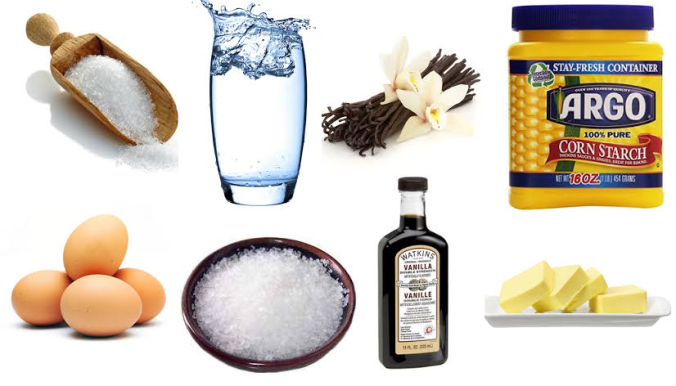
curd ingredients
1 cup sugar

3 tablespoons cornstarch

2 vanilla beans, halved, split and scraped

1 cup water

Large pinch of salt

2 egg yolks, beaten

4 tablespoons cold butter, cut into pieces

2 teaspoons vanilla extract

In a medium pan, combine sugar, cornstarch, salt, and vanilla beans and caviar. Add water and cook over medium heat for 5 to 7 minutes, or until thickened.

In a small bowl, lightly beat egg yolks. Whisking constantly, very slowly pour about a cup of the hot sugar mixture into egg yolks; add egg yolk mixture back to hot sugar mixture, whisking to combine. Cook over medium heat for 4 minutes, or until thickened.

Remove from heat.  Discard vanilla beans; whisk butter into hot curd. Stir in vanilla extract. Let cool; spoon curd into airtight container and store in refrigerator for up to 2 weeks.

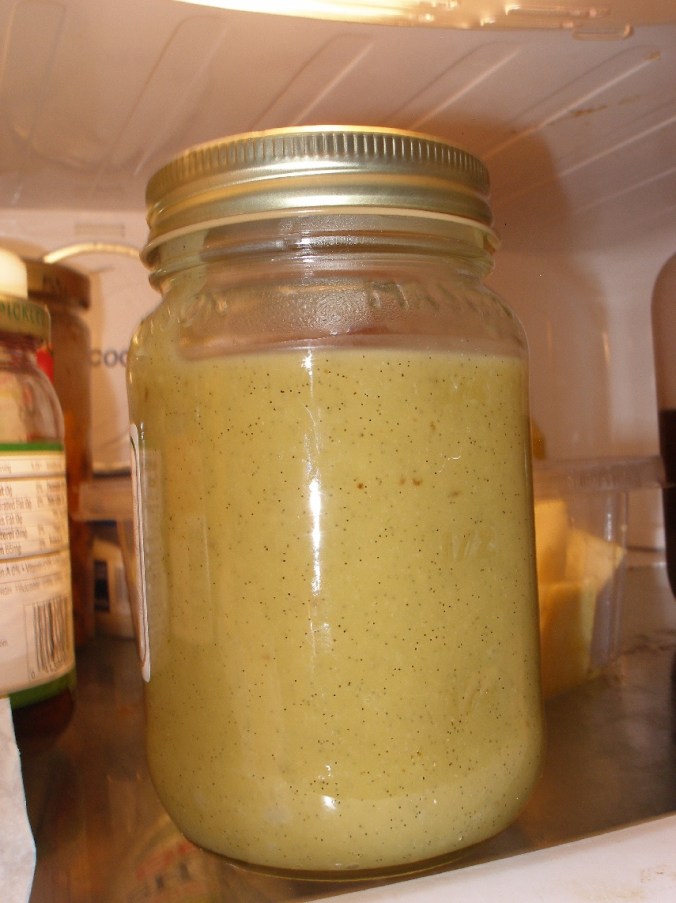
vanilla curd

The finished curd, becoming acquainted in my fridge.

This stuff tastes like vanilla did when you were a kid, and your taste buds were new.  Think drinking milkshakes in the back seat or Hunt’s Snack Pack with the metal pull-off lid that all the grown-ups said would cut your tongue when you licked it (but it never did).  It tastes like what vanilla smells like.  It tastes like warm happiness.

The texture is like lemon curd or creamed honey.  It’s slow moving and very spreadable.

What to put it on?

Well, my spoon worked awesomely.  But seriously, I’d put in on cakes, or cookies.  You could drizzle it on ice cream or fruit, or stir it into some hot milk, with a dusting of nutmeg.

As for me, I had a schmear on my English muffin.

And totally felt like I was back in the lunchroom at Central Elementary.

Thanks for your time.

Open your pie hole

Bless her heart.

bless

Every good Southern girl knows what this means…

I grew up eating my mom’s version.  She uses canned beans, canned tomato soup, and instant mashed potatoes.  She calls it shepherd’s pie.  But lamb is the base of shepherd’s pie.  And lamb ain’t something that’s ever gonna happen at her house.  She hates it.  The closest thing to lambs at my folks’ place would be a wool sweater.

She makes hers with ground chuck, and when you make it with beef, it’s called cottage pie.

I’ve been in many different kitchens; both professional settings and private homes.

dream kitchen.png

Here’s the kitchen in my mind.

I’ve picked the brains of every cook I could get to stand still long enough to answer any one of a thousand questions.  I now have many of these generous culinary coaches on speed dial and email 911.  Because of their generous, patient, support, I have been able to develop my own personal cooking philosophy.

Here ‘tis:

“Treat every ingredient with respect and elevate it as much as is possible, be it a humble egg, or the most expensive cut of meat.”

So when I decided to make cottage pie, I wanted to use from-scratch ingredients.  I would also work to get the best flavor and most desirable texture to which each ingredient was able to rise.

Honeymoon Cottage Pie

cottage pie

1 lb. 80/20 ground beef

1 large yellow onion, chopped

3 cloves garlic, diced

1 lb. mushrooms, cleaned and sliced

½ cup all-purpose flour

3 tablespoons butter (if needed)

1/3 cup dark beer

2 tablespoons tomato paste

2 cups low-sodium beef stock

1½ teaspoon dried thyme

2 teaspoons fresh rosemary, chopped finely

2 bay leaves

2 cups frozen peas

2 cups carrots, peeled and chopped into ½-inch cubes

Mashed potatoes:

10 medium sized potatoes, peeled and cut into chunks

4 tablespoons butter

1/3-3/4 cup fat-free buttermilk

1 cup shredded cheddar cheese

Salt & pepper

Place potatoes into large pot with plenty of salted water.  Cook over medium heat until spuds are tender.  Drain.  Place back into pot and drop in butter.  Sprinkle with salt and pepper, and using a hand masher, mash until smooth/chunky.  Stir in buttermilk until just a little loose.  Taste for seasoning, cover and set aside.

Preheat oven to 350.

Heat a large heavy skillet to medium-high.  Brown seasoned hamburger.  When cooked, set aside, and leave fat in skillet (add butter if there’s not at least 3 tablespoons).  Put in onions, mushrooms, thyme, rosemary, and bay leaves.  Season veg.  Cook until onion turns golden.  Stir in tomato paste.  When paste darkens and starts to stick to the bottom, deglaze with beer.  When the liquid’s cooked out, mix in flour and cook for 1 minute.  Pour in beef broth and stir until smooth.  Bring to a simmer and take off heat (it should be nice and thick).  Add back meat and peas and carrots.  Check for seasoning.

Pour into a greased casserole dish, or 6 individual ramekins.  If you use individual dishes, you can freeze some for another night. 

Top with mashed potatoes.  Smooth over the top, leaving no gaps.  Cover with foil, and bake for 30 minutes.

After 30 minutes, remove foil and top with cheese.  Return to oven and cook under low broiler until browned and bubbly.  Serves 6.

This is even better with crusty bread and a crisp, green salad.  If you’re a beer drinker, serve it with a glass of the same type you cooked with.  You literally can’t get a better pairing.

Both Petey and I grew up in the 1960’s-70’s.  In this era most of the moms had been raised during the Great Depression and/or World War II.  They were sick of economizing, making do, and Victory gardens

This ennui resulted in a heady enthusiasm for cooking with cans of this, and jars of that.  The only fresh produce many kids from our generation ever saw was potatoes, tomatoes, and iceberg lettuce.

Is it any wonder we have such a messed up relationship with food?  This stuff was considered good eats back in the 70’s.  And what’s up with the knife-wielding woman under the table?

So while many of those dinners we ate hold nostalgic appeal, processed foods do not.  Rehabbing this food using better techniques and fresher ingredients gives us the best of both worlds.

And since we baby boomers are looking at 50 in the rearview mirror, healthier is much smarter.  I don’t know about you, but I’d like to be around to embarrass my great-grandkids.

Embarrassing yes, but even I have my limits.

Thanks for your time.

The late-ish Debbie Matthews

I always used to be on time.  Always.

Then I met Petey.  That boy will be late to his own funeral.

So the fact that I’m talking about corned beef and cabbage, 3 ½ weeks after Saint Patrick’s Day is apt.

But you know what?

Any time is the right time for corned beef, because it is heavenly, meaty ambrosia.  Whether eaten hot, with a plate full of butter-drenched veg, or heaped between some rye, corned beef is mouthwateringly delicious.

Recently I made it for the first time.

This wasn’t by choice.  If I’d had my way, I’d make it all the time.  But Petey absolutely loathes it.  And, until recently, so did The Kid.

My child and I share a love of Reubens.  But traditional corned beef and cabbage was only enjoyed by me, and I couldn’t justify cooking an entire brisket for one.  Joyously, The Kid has lately had a change of heart.

But Buddy-Roe, we can put away Reubens like Reuben-eating rock stars..

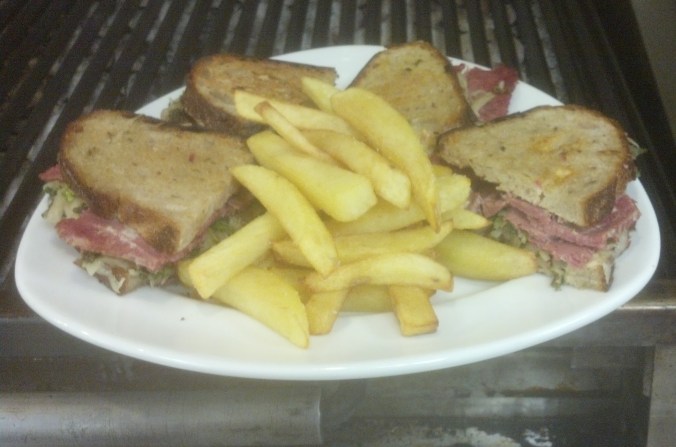
Profoundly non-kosher Reubens

reuben

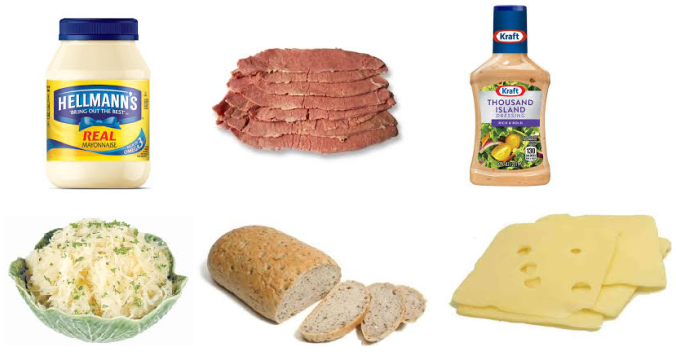
4 slices seeded rye

½ pound thinly sliced corned beef

½ cup sauerkraut

4 slices Swiss cheese

Mayonnaise

Thousand Island dressing

Lay out bread.  Spread mayo to taste on 2 slices, and Thousand Island on the other two.  Lay one piece of cheese on each slice of bread.  Top half the rye with corned beef and sauerkraut. 

2012-12-10_18-34-24_659

Spread very thin layer of mayo on the outside of sandwiches.  Cook in skillet on medium-low until hot and melty.

But to make this delicious dish, you need some corned beef.  Most of the time I pick it up from a deli.  But now I can make corned beef with veggies, and put together a Reuben with homemade leftovers.

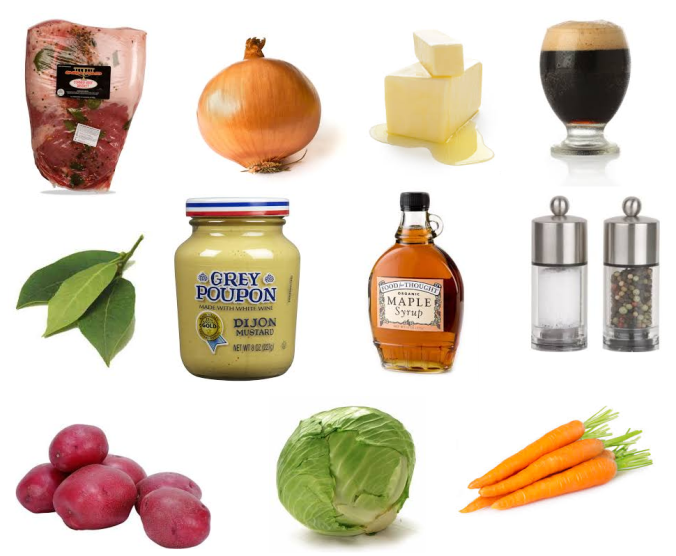
Corned beef and cabbage

corned beef

2 pound corned beef brisket with spice packet (or 2 tablespoons pickling spice)

1 large yellow onion

2 tablespoons butter

4 bay leaves

3 cups dark beer, divided

2 heaping tablespoons Dijon mustard

2 tablespoons maple syrup

Salt and pepper

Water

8-10 medium red skinned potatoes, washed and cut into 4 pieces

1 head of cabbage, cored and cut into 8 pieces

1 pound carrots, peeled and cut into large pieces, or left whole if they’re small

6 tablespoons butter melted mixed with 2 tablespoons each chopped fresh parsley and chives

Preheat oven to 250.  Place Dutch oven on stove-top and set to medium.  Melt butter in pot.  Slice onions into half-moons.  Add to pot with bay leaves, spice, salt and pepper.  Cook on medium-low until onions are golden.  Turn heat up to medium-high and stir in mustard.

Pour in ½ cup beer.  Scrape up any bits clinging to pot bottom.  Add maple syrup and cook until almost dry.  Add rest of the beer.  Place in brisket, fat side up.  Add enough water to barely cover meat.  Insert probe thermometer set to 210.  Cover and place in oven.

When brisket gets to 195 degrees, put potatoes into separate pot with salted water to cover.  Add enough corned beef cooking liquid to cover by 1-2 inches.  Cook on medium.  After 10 minutes add carrots and cabbage.  Cook until all veggies are tender.  Drain and pour parsley-chive butter over.

When corned beef hits 210, remove from oven and let rest for 5-10 minutes.  Carve thinly against the grain.

Serves 6.

Normally I’d recommend serving this with salad.  But when it comes to this meal, I have no shame.  I can eat my weight in corned beef.  When this is on the menu, I don’t want to clutter up my belly with anything else.

Thanks for your time.